In late 2022, I was honoured with a commission to create a series of landscape illustrations. The task was to visualise what nature recovery in the Forest of Bowland could look like, crafting a compelling visual narrative about the future of this truly vital landscape.
To bring these illustrations to life, I began working closely with the very knowledgeable Jenny Wain from Mot Mot Consulting. Throughout 2022 and 2023, I had the opportunity to observe Jenny and the dedicated Forest of Bowland team as they liaised closely with a wide range of local stakeholders. This even included attending an insightful workshop to see the collaborative process in action, bringing together voices from Natural England, local farmers, land managers, charitable organisations such as the RSPB, and others with deep connections to the area.
Through an extensive process of gathering information, conducting surveys, and undertaking research, Jenny meticulously constructed a robust consultation document. This foundational work established the agreed priorities for nature recovery within the Forest of Bowland, culminating in the landmark Nature Recovery Plan. This comprehensive document outlined the most valuable existing habitats and detailed specific, thoughtful proposals for improving or creating new havens for nature.

The Forest of Bowland is an area of international importance, cherished for its expansive peatlands, heather-clad moorland, vibrant wildflower meadows, and ancient Atlantic oak woodlands, as well as its rare and treasured bird species. The Nature Recovery Plan thoughtfully addressed how many of these crucial habitats have come under increasing pressure. Importantly, it also detailed proactive strategies for how we can restore these landscapes, enhance habitats for wildlife, and harness the area’s invaluable natural assets to mitigate the far-reaching impacts of climate change.
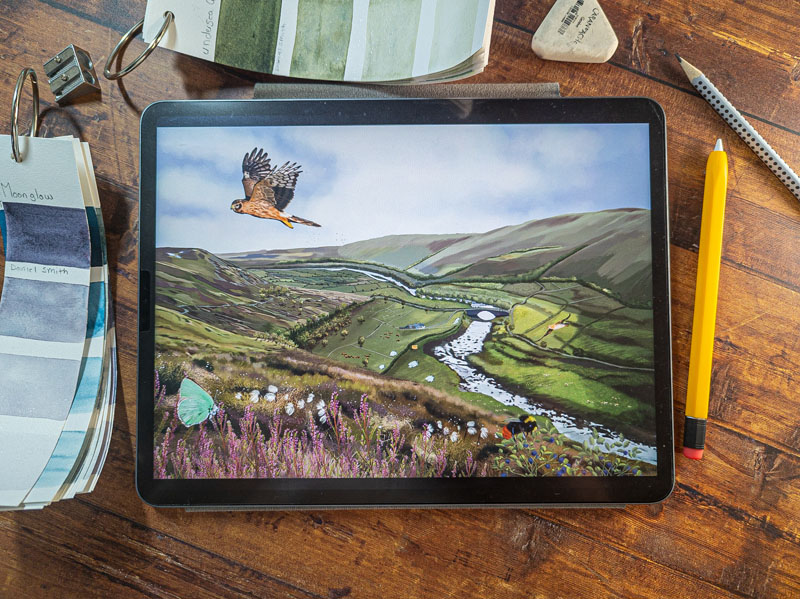
During my involvement in the project, I focused on creating a collection of eight companion visualisations. This comprised four “before” illustrations, depicting contemporary views of key Forest of Bowland habitats. These were then followed by four “after” views of the very same locations, but imagined over two decades into the future, powerfully showcasing the potential results of dedicated and careful nature recovery work.


As you look at these illustrations, you’ll notice the various species of birds, plants, insects, and mammals that I diligently wove into each scene. What’s particularly notable, I hope, is how their numbers and diversity are depicted to grow and flourish over time, reflecting the positive changes.


You can view the complete series of landscapes in my portfolio here
Towards the end of the project, fourteen key species were specifically highlighted, and these subsequently became affectionately known as the ‘Champion’ Species.
Here in the Forest of Bowland, these Champion Species are:
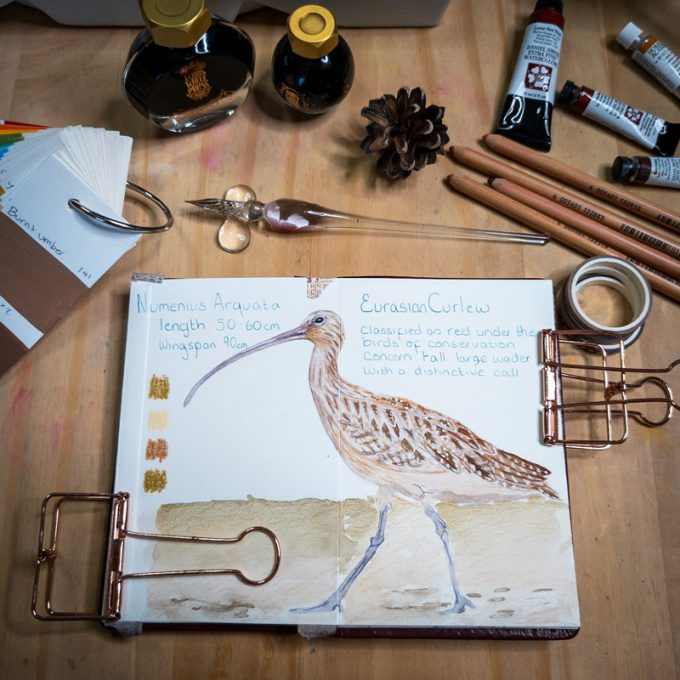
- Eurasian Curlew (Numenius arquata)
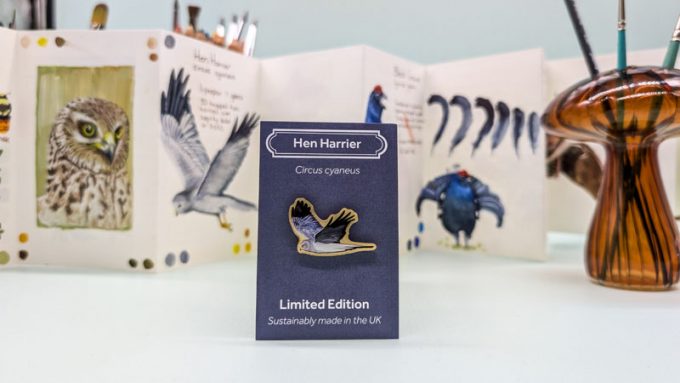
- Hen Harrier (Circus cyaneus)
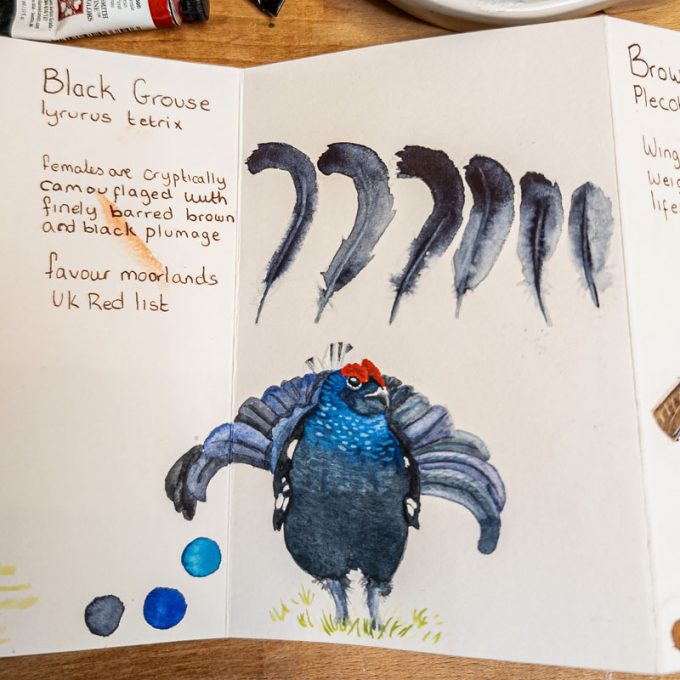
- Black Grouse (Lyrurus tetrix)
- Swift (Apus apus)
- Pied Flycatcher (Ficedula hypoleuca)
- Juniper (Juniperus communis)
- Globeflower (Trollius europaeus) and its associated Chiastocheta flies
- Hard-fern (Blechnum spicant)
- Ballerina Waxcap (Porpolomopsis calyptriformis)
- Brown Long-eared Bat (Plecotus auritus)
- Brown Trout (Salmo trutta)
- Yellow May Dun (Heptagenia sulphurea)
- Bilberry Bumblebee (Bombus monticola)
- Green Hairstreak butterfly (Callophrys rubi)

These species were carefully selected because they are of significant conservation concern. Some are designated as Species of Principal Importance under Section 41 of the Natural Environment and Rural Communities (NERC) Act 2006, others feature on the UK Birds of Conservation Concern Red List, or are nationally or locally documented as rare or threatened.

Interestingly, the presence (or indeed, absence) of these species also serves as a vital indicator in the Forest of Bowland. Their populations can reveal a great deal about how well an ecosystem or specific habitat is functioning and its overall health.

From my engagement with this project, I learned so much about these incredible species. Many on this list are wonderfully charismatic, possessing distinctive qualities and truly memorable characteristics. Once you begin to learn the compelling stories of these remarkable creatures and plants, it’s hard not to feel a profound connection and a strong desire to care for them and their precious habitats.
This experience has inspired me, and I’m now planning to do a ‘deep dive’ series on each of the 14 Champion Species, giving them the individual attention and spotlight they so richly deserve!
In the meantime, if you’d like to know more, you can download a copy of the 2024 Nature Recovery Plan and delve into its details here: https://www.forestofbowland.com/nature-recovery