Hello again! Welcome back to my blog series, where I delve into the ‘Champion Species’ of the Forest of Bowland National Landscape through an artist’s eyes.
After my deep dive into the elusive Hen Harrier, this week, my easel and I are turning our attention to another truly iconic resident of this breathtaking region: the Eurasian Curlew (Numenius arquata).
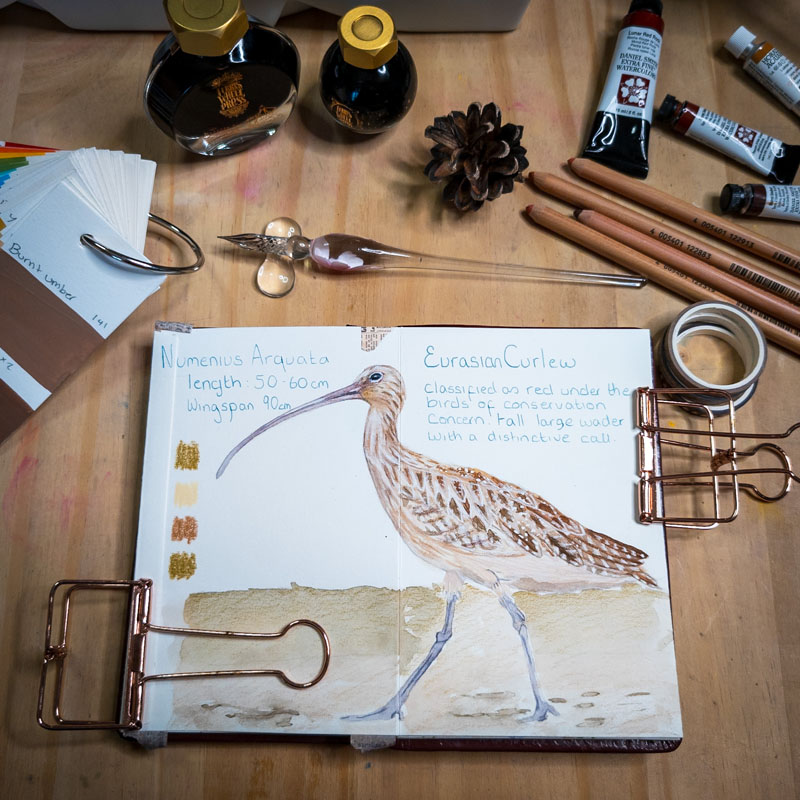
The Curlew is just a wonderful subject to study. From an artist’s perspective, it presents a captivating challenge. Its sheer size, elegant form, and unique plumage make it an absolute joy to take from initial sketch into a finished piece.
The curlew is big, much bigger than initially thought too. It’s said to be the largest wading bird in Europe, and gracing the Bowland landscape. But what truly sets it apart is that unmistakable down-curved bill. It’s not just a feature; it’s a masterpiece of natural engineering too. Watching the curlew in action makes you realise they are perfectly evolved for probing deep into the earth for hidden invertebrates. Even its Latin name, arquata, meaning “bow-shaped,” is a direct nod to this magnificent, distinctive bill.
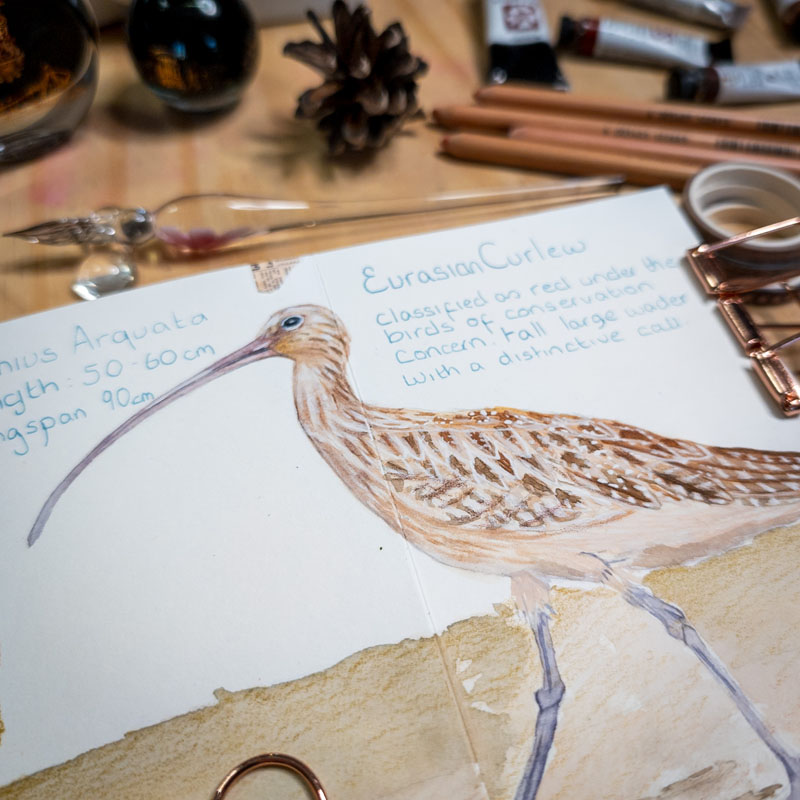
The Curlew plumage is a subtle symphony of mottled browns and greys, offering camouflage so effective it almost makes them vanish into the very landscape they inhabit. Honestly, these birds are practically ninjas; you will hear it long before you see it.
To truly capture their plumage, I find myself reaching for cool browns, striving to document every nuanced pattern variation. Titanium Buff, Burnt Umber, and warmer mixes with French Ochre become my allies. It’s crucial to work on a generously sized surface as well. Go to small, and the artwork becomes tight, almost suffocating to finish. You can’t get in all the texture that defines their feathers without room for expressive guestures.
There’s simply too much going on to cram into a tiny space.
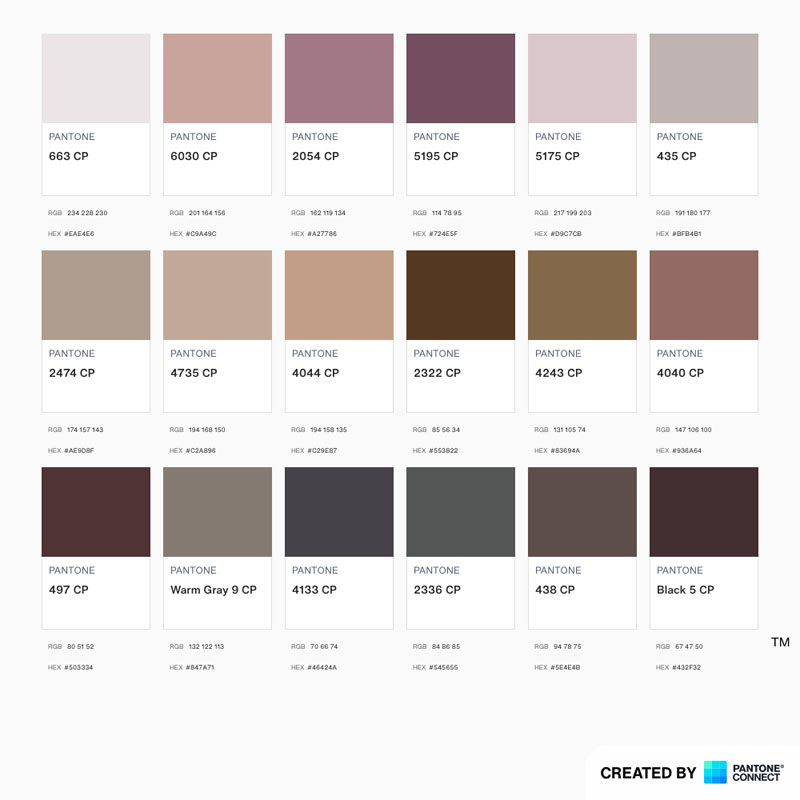
But within these muted browns and neutral buff tones, there’s a surprising contrast. Their legs and that magnificent bill often reveal a delicate purple cast. For this, I turn to Daniel Smith’s Jane’s Grey and Potter’s Pink. There’s something magical about how that pink “pops” against the earthy browns, adding an unexpected vibrancy to the finished piece.
Distinguishing between a male and female Curlew often requires a keen eye and a bit of visual measuring. As their appearances are remarkably similar, with the female boasting only a slightly longer bill.
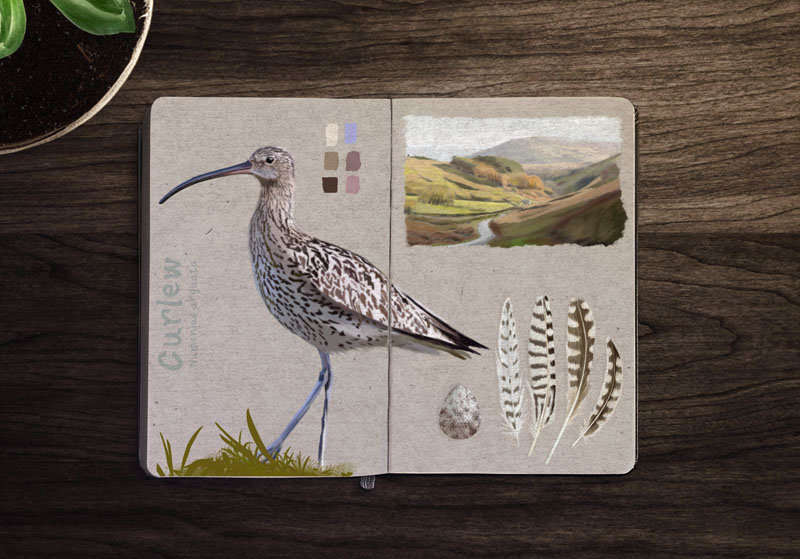
Here in the Forest of Bowland, you’ll often hear the Curlew long before you ever catch a glimpse of its form. They are masters of disguise, favouring taller, open vegetation. This makes Bowland an ideal sanctuary and backdrop for their melancholic, bubbling song – offering countless places to blend seamlessly into their surroundings and remain hidden.Their call, that haunting, bubbling “curloo-oo,” is without a doubt one of the most evocative and unforgettable sounds you’ll ever experience in the Bowland area. It’s the very soul of the landscape. You can hear their distinctive call on the RSPB site.
Sadly, much like the Hen Harrier, the Curlew faces significant and pressing challenges. Their numbers have plummeted in recent decades, tragically earning them a “Red List” status in the UK – a stark indicator that they are of the highest conservation priority. Globally, the British Trust for Ornithology (BTO) lists the Curlew as “Near Threatened” on the IUCN Red List of Threatened Species. You can delve deeper into their status and ongoing conservation efforts on the BTO website.
Habitat loss and increased predation are major factors contributing to this heartbreaking decline. But there is hope. Dedicated efforts are underway to protect these enchanting birds and their vital habitats. The Nature Recovery Plan offers a hopeful vision for the future, advocating for the increase of curlew-friendly habitats and the widespread adoption of sympathetic land management practices. If you’re keen to learn more about the long-term vision for the Curlew in the Forest of Bowland, I encourage you to explore the 2024 Nature Recovery Plan.