Well, the rain just kept on, well, raining. It feels like April and May were holding out on the wet stuff, only for June to finally declutter itself of all that H2O.
The shape of the week, combined with the general downpour, kept me busy indoors. Not that it was a wasted effort! I had a good old move-around and tidy-up at my desk, and lo and behold, I can now see the bird feeder much better. This clear view also reminded me to rescue my tomato plants (Solanum lycopersicum ‘Tumbling Tom’ if we’re being fancy) from the greenhouse and give them a shot in hanging baskets this year. Fingers crossed they comply and actually, you know, tumble.
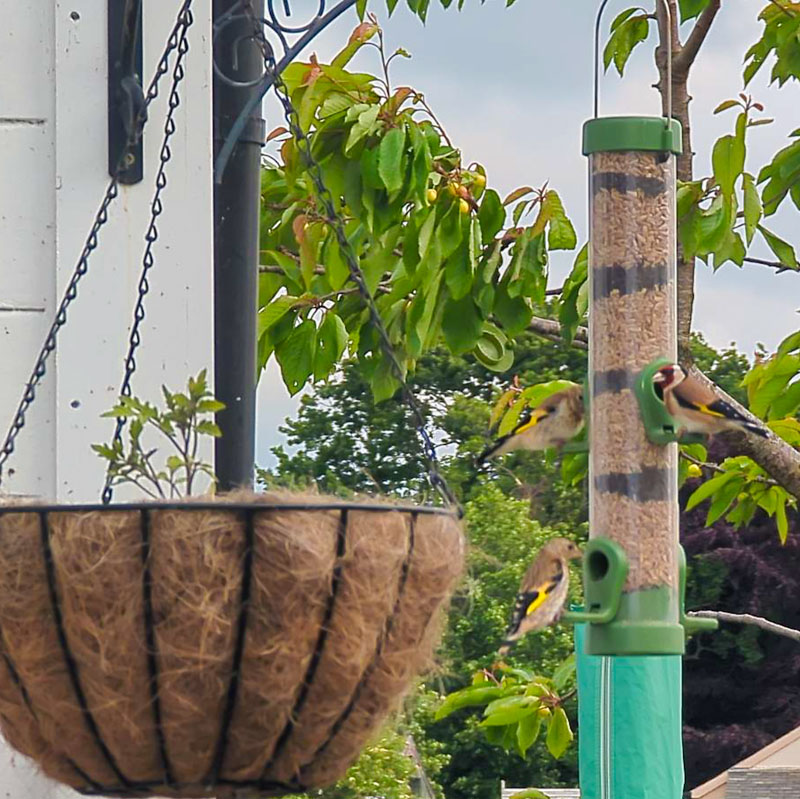
My newly optimised bird-watching station has been a delight. I’m now seeing both goldfinches (Carduelis carduelis) and greenfinches (Chloris chloris) who, with an almost comical politeness, keep sitting in the hanging basket as they queue up for a coveted spot at the feeder next to it. There are some fledglings that have joined in too! You can tell because their plumage is a bit duller than the adults, and they often have a faint, fluffy appearance – like they just rolled out of bed. Plus, they tend to be a tad clumsier. Don’t tell them I said that.
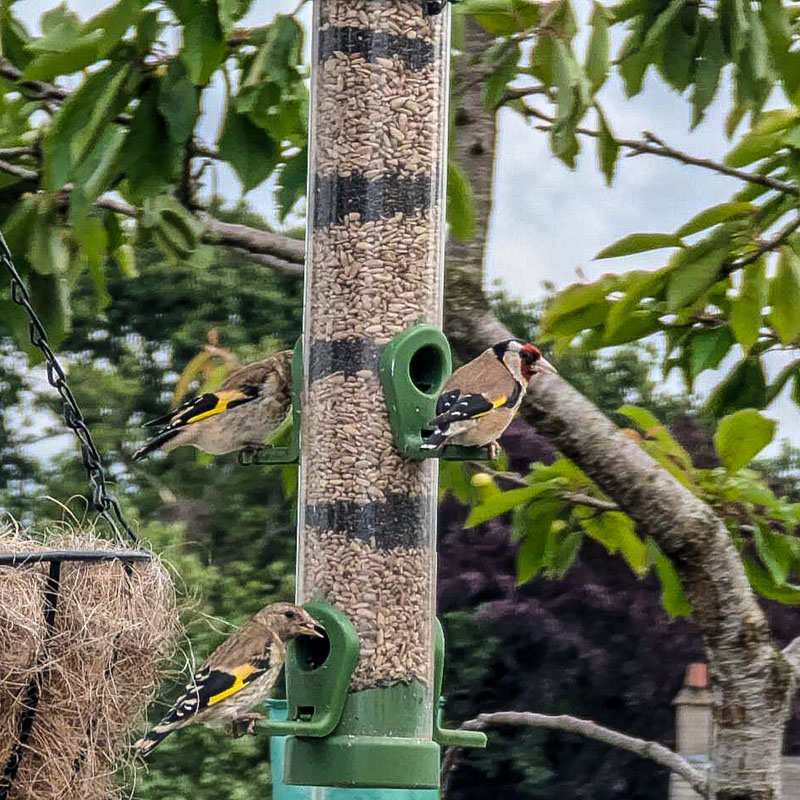
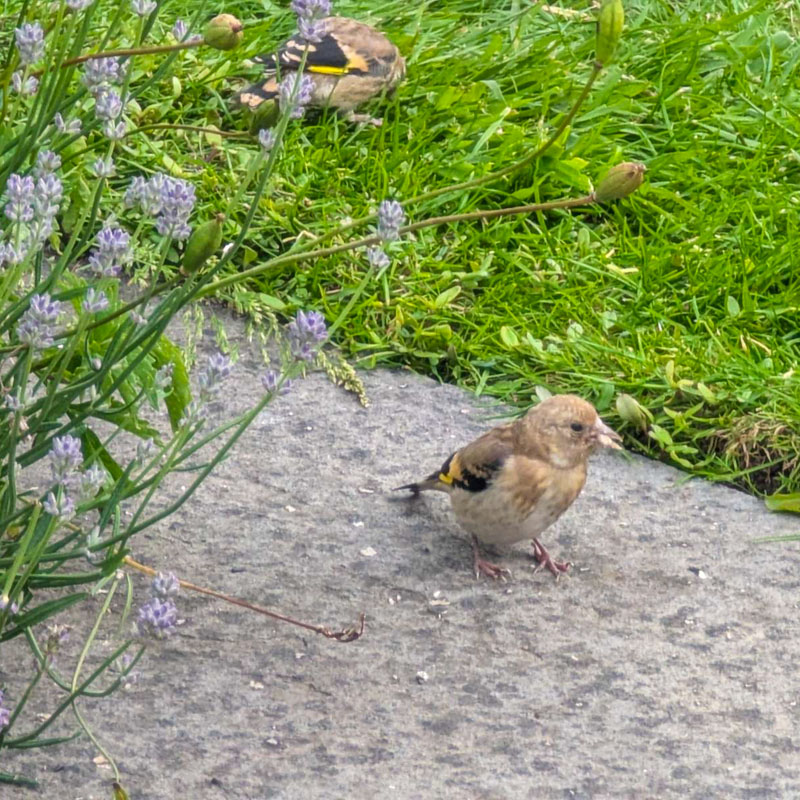
They certainly do like this garden spot as the feeder is usually brimming with sunflower and Niger seeds, making it a top-tier snack fest for them. I suspect finches like Niger seeds in the same way I like salted caramel or dark chocolate. They are basically tiny, feathered, seed-guzzling machines – and I can totally relate. Adding to the avian excitement of the week, I had a male pheasant (Phasianus colchicus) drop by to strut his stuff at the bottom of the garden. I absolutely adore their rich, burnished gold colouring.
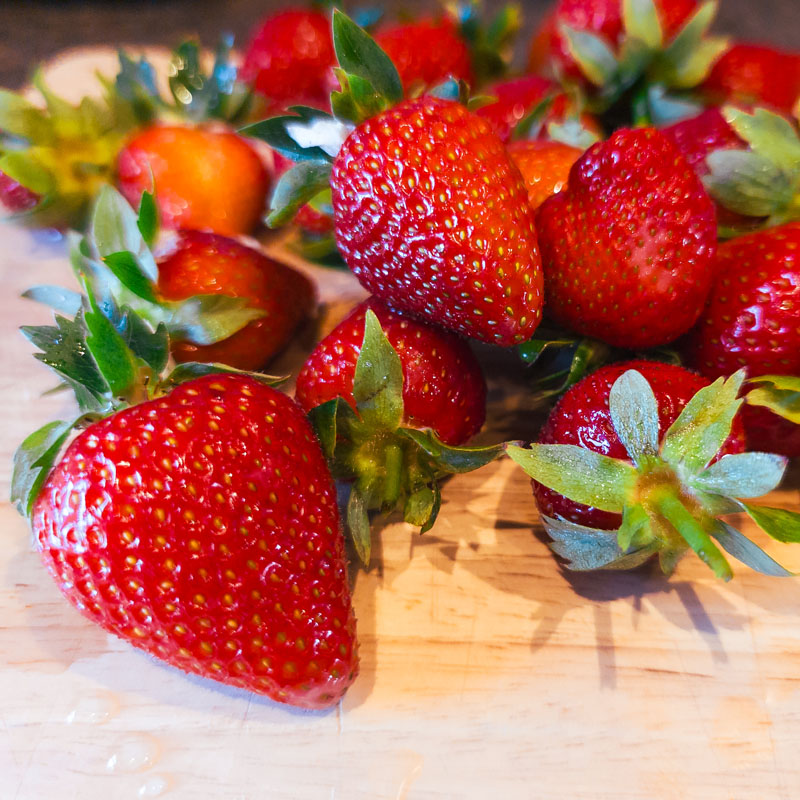
Please don’t be under the impression I’ve been stuck indoors all week though, gazing outside. On the rare dry spots I managed to sneak out. I found a few ripe strawberries, which promptly ended up in my breakfast bowl. The wonky-shaped cherry tree we’ve inherited in the garden is currently ripening its load, and the blackcurrants and blueberries are looking absolutely enormous this year. A proper bounty!
But it wasn’t just fruit making an appearance. This recent climate of lush rainfall, after weeks of drier weather, has prompted a veritable bevvy of mushrooms to pop up in the grass around these parts. Quite apt, really, considering season two of The Last of Us just aired recently too (IYKYK – no spoilers here, just fungal vibes!).
While autumn often gets all the glory as “mushroom season” for artists and foragers alike, this May and June have presented an interesting period for fungal observation. So bear with me as I ramble on now, as it’s been my main musing all week. I’m assuming it’s the increasing warmth combined with the abundant wetness that has supported the fruiting bodies of the mycelial network to bloom? It’s like nature decided to throw a surprise mushroom party on my lawn and I’m here for it.
I used to see a lot more mushrooms than I currently do here on the coast. The North West of the UK, with its wonderfully diverse habitats encompassing woodlands, meadows, and heathlands, provides particularly fertile ground for fungi spotting. Salt marsh habitats, however, support more microscopic fungi, belonging to groups like Ascomycota and Dothideomycetes. These fungi are typically hard at work breaking down dead organic matter from specific salt-tolerant plants such as common reed (Phragmites australis) and sea blite (Suaeda maritima). Tiny but mighty!
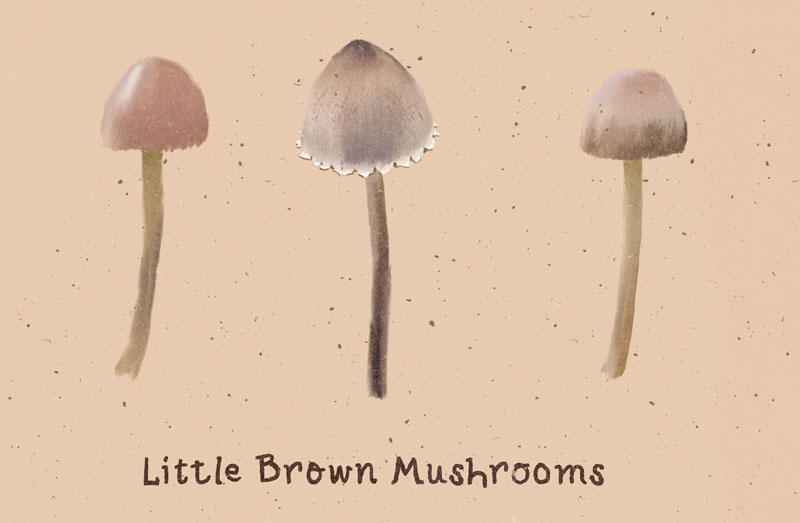
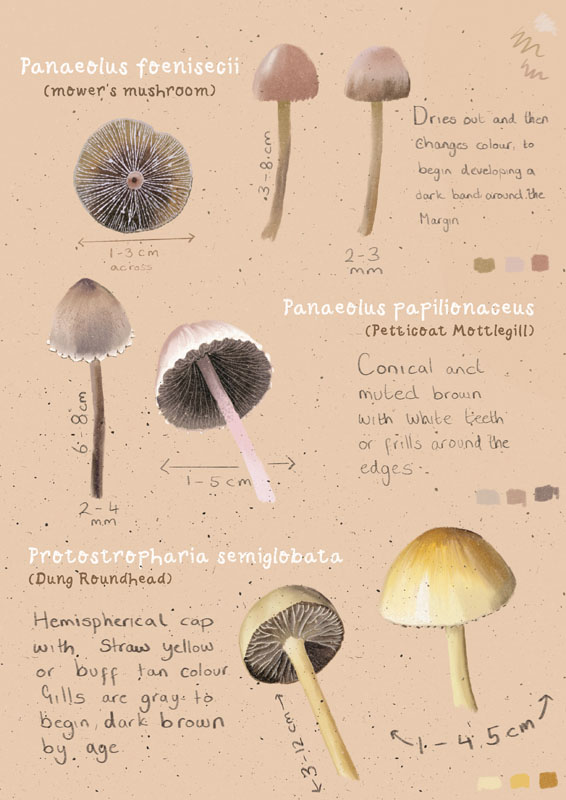
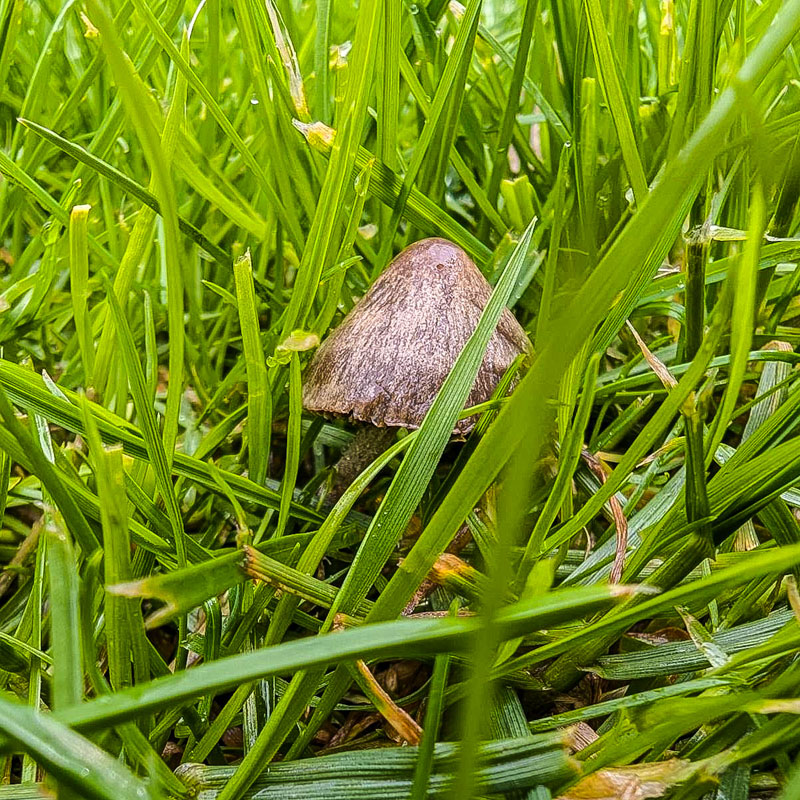
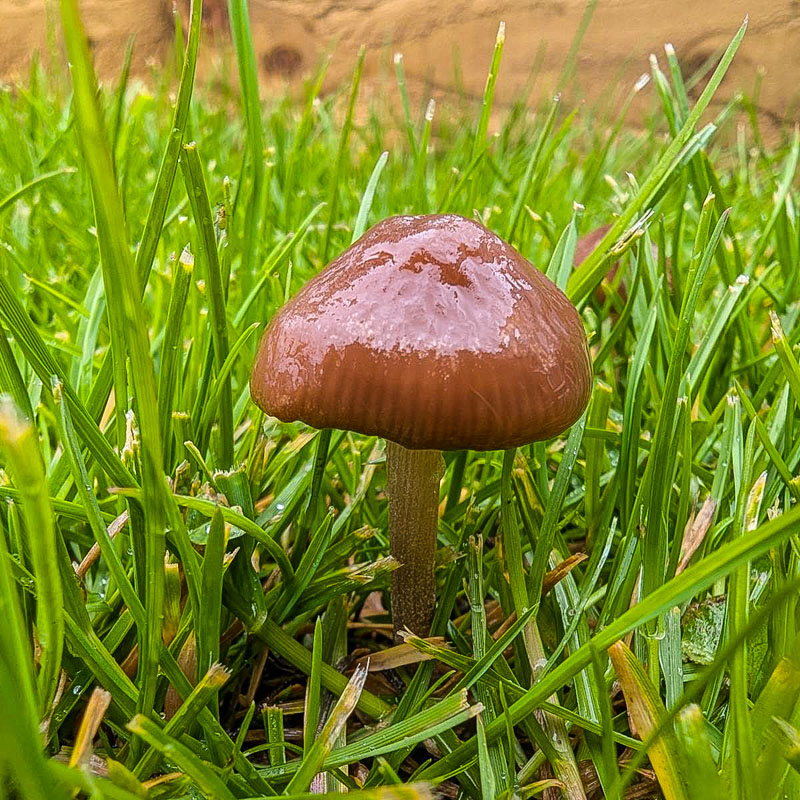
In my own garden, I suspect the ones I spotted were LBMs (Little Brown Mushrooms) known as a Mowers’ Mushroom (Panaeolus foenisecii). My trusty mushroom spotting app also suggested they could be Petticoat Mottlegill (Panaeolina papilionaceus) or Dung Roundhead (Protostropharia semiglobata). But honestly, I’m a great mushroom identifying skeptic. I’m more than happy to let other, more fungi-clever people step in and confirm. My identification skills extend to “looks like a mushroom” and “definitely will not eat”. There is a very, very good reason for that.
Before I digress into mushroom doom, I want to say that books tell me several highly prized species could be fruiting very soon. The Girolle, also known as the Golden Chanterelle (Cantharellus cibarius), has its season from June to August, making it more summer than spring-summer. Robust bracket fungi, including the well-known Chicken of the Woods (Laetiporus sulphureus), also fruit from late spring into autumn. You may also find the Field Mushroom (Agaricus campestris), Macro Mushroom (Agaricus crocodilinus), Pavement Mushroom (Agaricus bitorquis), Blushing Wood Mushroom (Agaricus sylvaticus), Scaly Wood Mushroom (Agaricus langei), and Inky Mushroom (Agaricus moelleri) can all in June. The Fairy Ring Champignon (Marasmius oreades), a popular edible, is also common in late spring and early summer, with its season starting in April.
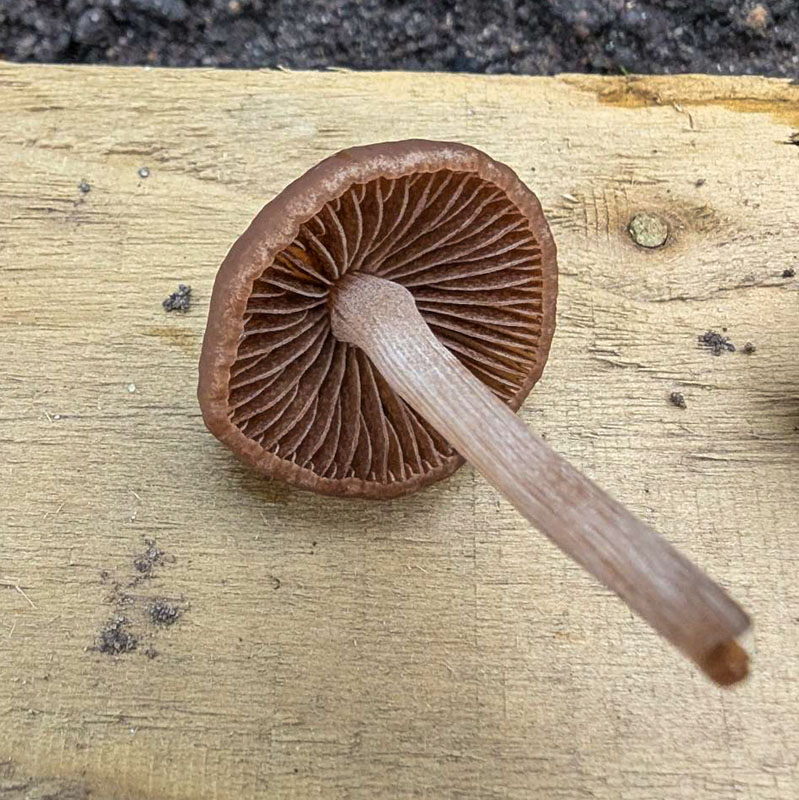
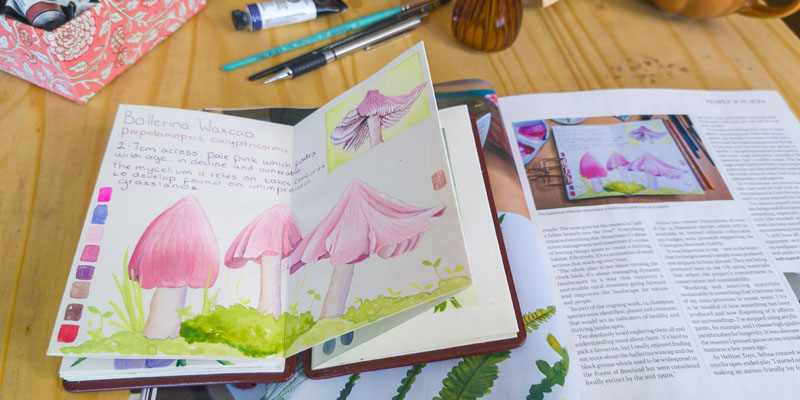
Back to my fungi doom for a moment though. I do own a forager’s book (or two), and I enjoy fungi spotting. However, I’d honestly rather leave them be and draw them, rather than eat them. I’m just not particularly fond of the taste of mushrooms, which I’m sure is a controversial stance for a vegetarian. Plus, if I’m foraging to eat, it’s usually for fruit, as I’d much rather be making jams or jelly to satisfy my sweet tooth (all 32 of them, thank you very much). I’m well aware that mushrooms are tricky customers and require meticulous examination to be assured of their edibility. When it comes to foraging, for every supposedly tasty wonder, there’s an evil twin lurking, just waiting to take down any overconfident soul.
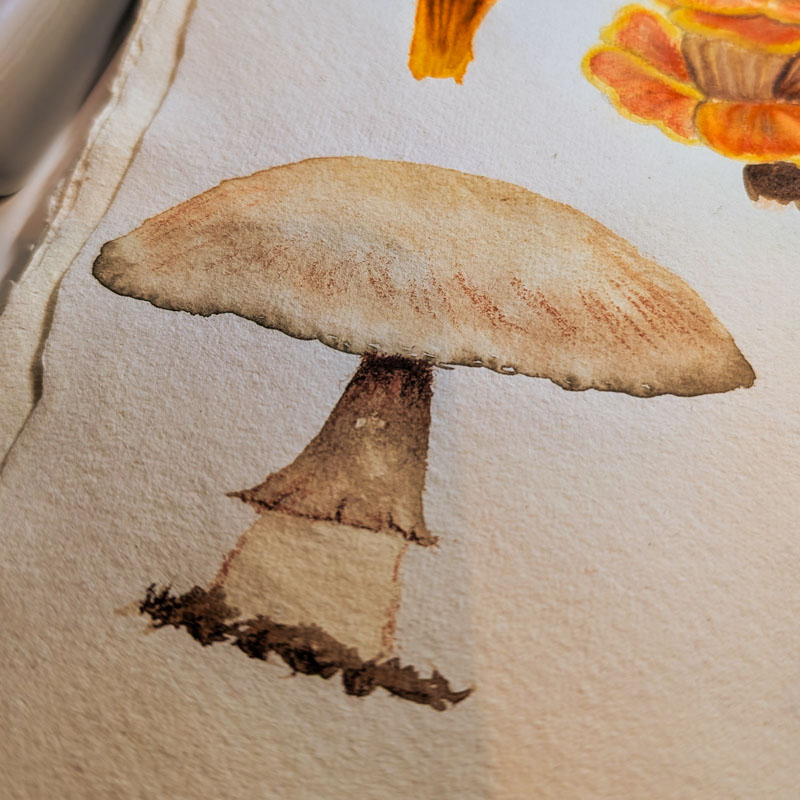
So, if my rambling blog post has got you considering doing a bit of online mushroom recipe searching, a word of caution! It’s important to note the emergence of certain poisonous species during this period. Some members of the dangerous Amanita family, such as the False Deathcap (Amanita citrina) and Jewelled Amanita (Amanita gemmata), begin to fruit in May, while the Tawny Grisette (Amanita fulva) starts in June.
The deceptive nature of certain look-alikes, where some unsafe mushrooms can bear an uncanny resemblance to safe species, truly takes the risk to the next level. So if you go on a fungi forage, the principle of “when in doubt, leave it out” is not just a sensible strategy; it can be a life-saving one, because eating some species of mushrooms can be very harmful or even fatal.
It’s why social media gets so twitchy when anyone posts about mushrooms too; I’ve even been temporarily banned from Instagram in the past for sharing an Amanita muscaria illustration I did! It was a little video clip. Apparently, even drawing them is deemed too adventurous for some. What do you think about my brush with the Instagram censorship board? It was all rather rebellious.
References
Boorman, L.A., 2003. Saltmarsh Review. An overview of coastal saltmarshes, their dynamic and sensitivity characteristics for conservation and management.
Calabon, M.S.; Jones, E.B.G.; Promputtha, I.; Hyde, K.D. Fungal (2021) Biodiversity in Salt Marsh Ecosystems. J. Fungi, 7, 648.