Hello, everyone. It’s so good to be back with you all. Life, as it often does, threw a few curveballs my way in the form of bereavement this year, and I had to take some much-needed time away to be with family again. It feels incredibly good to be back, ready to breathe in some fresh air and share the small, amazing moments as an artist and nature lover.
This week, my thoughts are dominated by one beautiful wonder plant: the sunflower. Their Latin name, Helianthus annuus, literally translates to “sun flower.” And as a summer-born child, they hold a special place in my heart, always reaching their magnificent height and flowering for my birthday in mid-August. One of my earliest memories, too, is taking a sunflower home from nursery and planting it in my beloved Nan’s back garden in Rochdale.
They are a burst of sun-drenched joy and memories on a sturdy stem. Yet that isn’t all. These incredible plants, which originally hail from North America, are full of interesting, observable quirks. As young flowers, their heads actually track the sun as it moves across the sky in a process called heliotropism. And if you look closely at the spiral of seeds at the centre of a fully bloomed sunflower, you’ll notice that they follow the mathematical principle of the Fibonacci spiral. The power of mathematics in nature’s evolution!
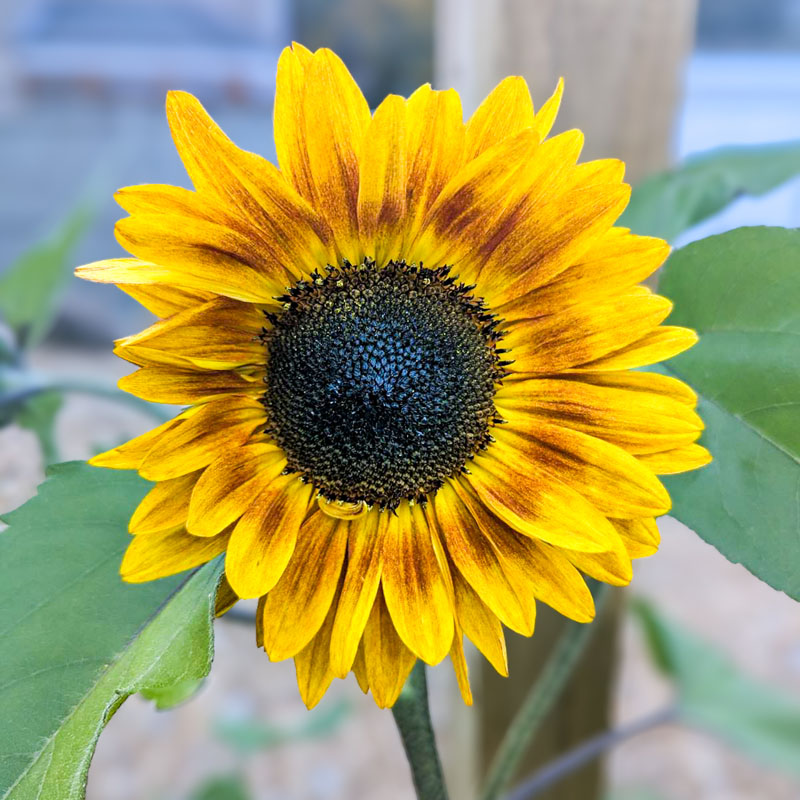
Let’s not forget, their seeds are packed with health benefits, and not just for us. Their large, nectar-rich flowers are a magnet for bees and hoverflies, while their seeds provide a vital food source for birds later in the year. Last year, I even witnessed a talented squirrel swinging from the top, digging into the head to gather a winter’s cache for itself. And when all is said and done, the dry stems can be cut down, left to dry out, and then used as canes for other climbing plants.
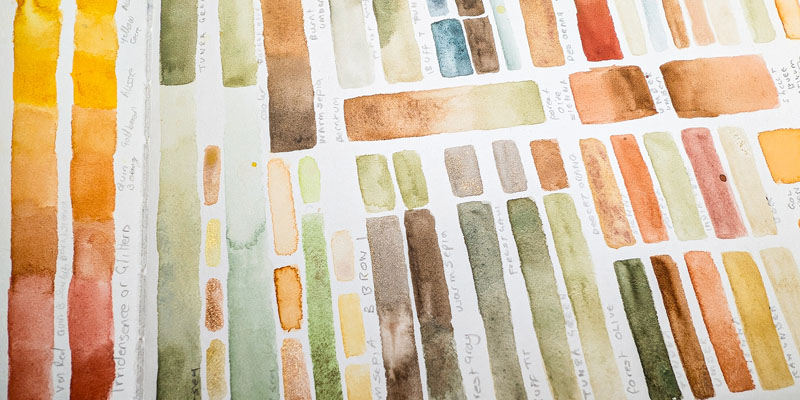
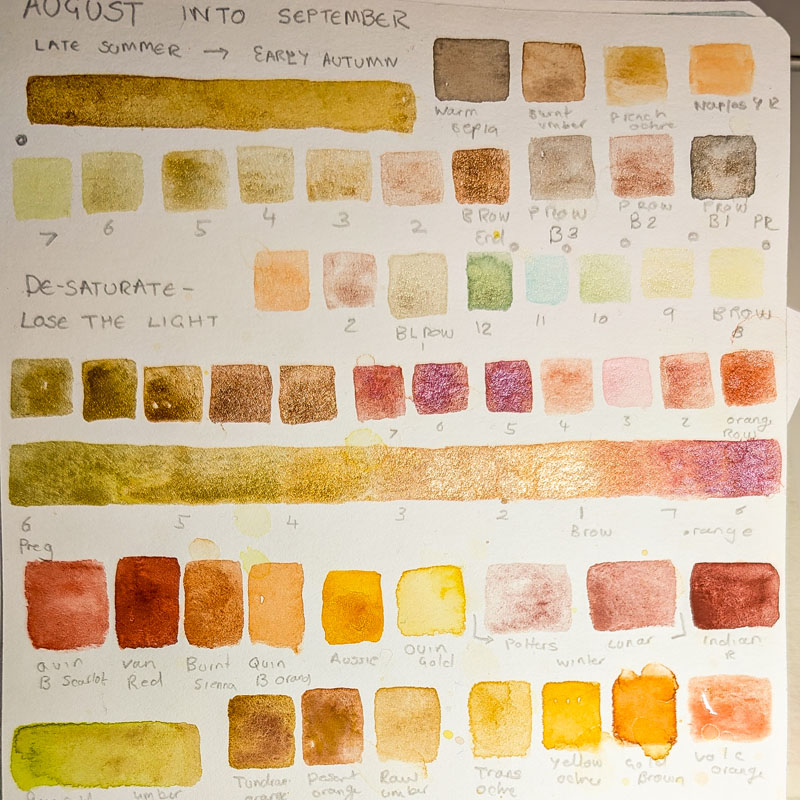
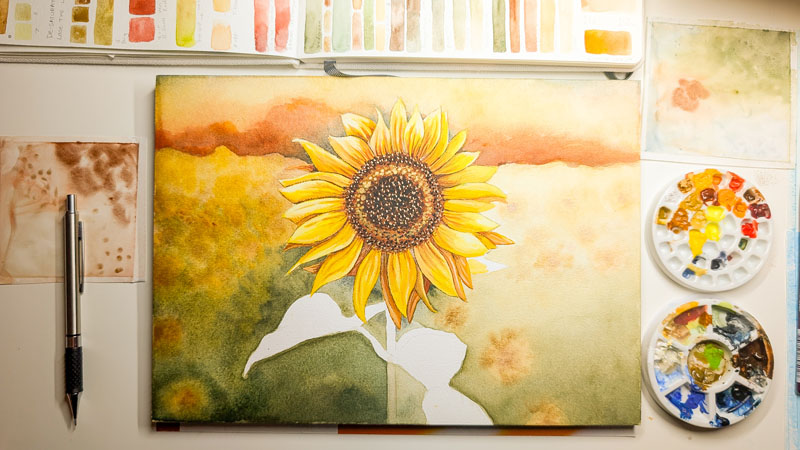
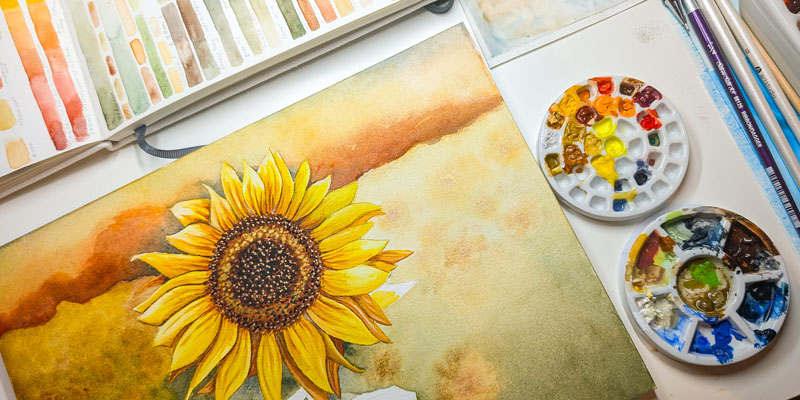
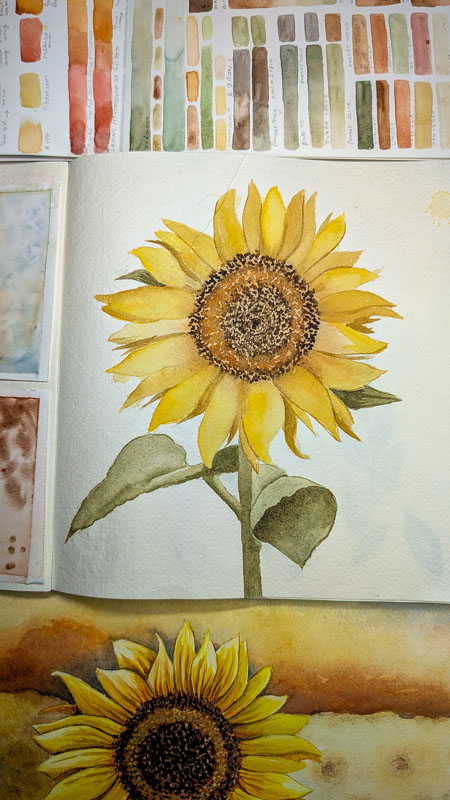
This week I’ve spent some time in my sketchbook, playing with the many hues these plants have to offer. They aren’t just a simple block of yellow—more like a rich tapestry of colours in their petals, from the light oranges of our ‘Colour Parade’ varieties, all the way down to a deep, burnt sienna that you find at the centre of the ‘Titan’ blooms. My sketchbook is full of swatches of some of my favourite colours for this purpose: Aussie gold, Quinacridone Burnt orange, Quinacridone Burnt Scarlet, burnt umber, raw umber, and Naples yellow.
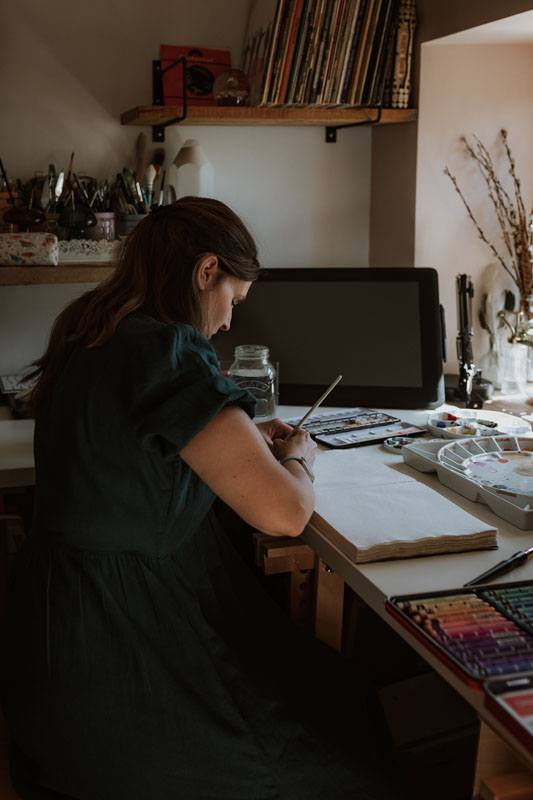
I’ve even experimented with incorporating iridescent colours, metallic pigments, and glitters too. I’m thinking of playing with their addition to try and capture the way the heads seem to glow in the late summer light. You can see this in my unfinished single sunflower study, with the bronzes and golds that shimmer on the paper.
But this year, my favourite sunflower story doesn’t come from nature or my sketchbook, but from the front of our house. This spring, my son, X, decided he was going to plant over 50 sunflowers in different varieties. And he did! We watched in amazement as they grew and grew in the greenhouse. Once they were ready, we set up a small table outside the cottage with a little honesty box, selling the varieties he had grown with Dad’s help.
What happened next was a truly heart-warming example of the blessings of living in such a wonderful village. M put a message out on social media, and before we knew it, the post had been shared and even picked up by the local radio! The result? All of our sunflowers were snapped up in record time, and X has more pocket money for his seeds, compost, and pots next year.
I’m looking forward to sharing more with you over the coming weeks, as we slip into autumn together. For now, I’ll be savouring the last of the sunflower season, a little more aware of their incredible power to bring both beauty and people together.