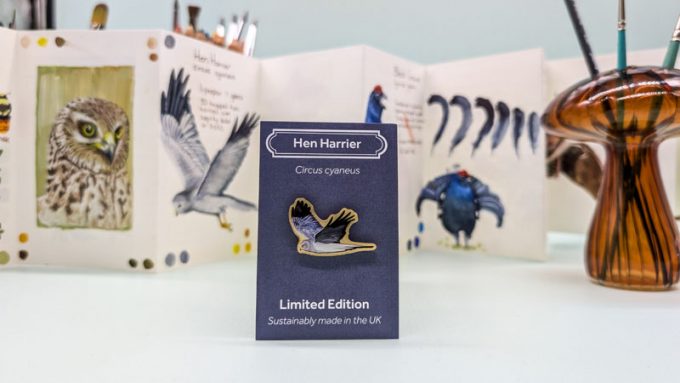
Whenever people see the Champion Species illustrations I’ve been working on, one of the first questions I’m often asked is, “How did you create them?” Sometimes, this is quickly followed by, “And how long did it take?” Then, there’s often a moment of curiosity: how exactly do these transform into small pin badges? Well, today I’d like to share a little about the process so far, and I also have some rather exciting news to finish off with!
First things first, if you’ve landed here and are wondering what the Champion Species are all about, I’ve written an overview introducing the project. That should give you all the background context.
For today, my aim is to offer a glimpse into the actual art process. Hopefully, it will provide some insight into the passion that is woven into a piece of work like this.
So, let’s step back to last year. It’s winter 2024, and realistically, it’s out of season for me to venture into the Forest of Bowland and observe these species directly. I do find going on location and getting reference material typically a great starting point, but this time required something else to get started. Thankfully, there’s a wealth of existing images, including a wonderful repository held by the Forest of Bowland team themselves, which helped to bridge this gap.
I began by gathering a considerable number of photos – at least around ten per species. This helps capture the different angles and specific elements I need to study in detail. With my references gathered, I needed a place to begin working.
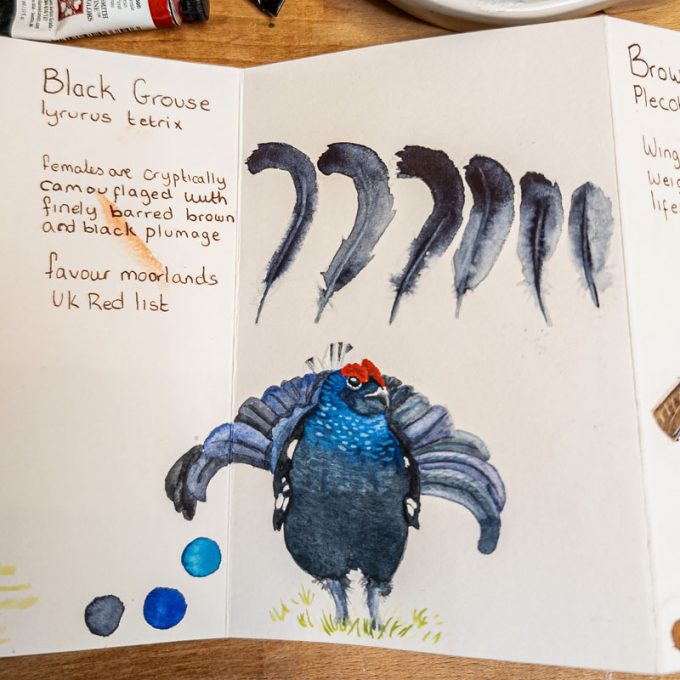
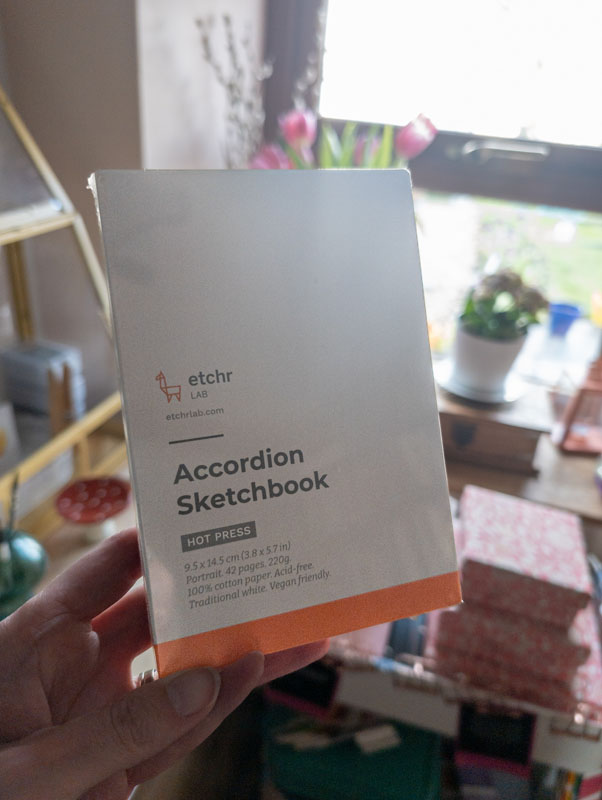
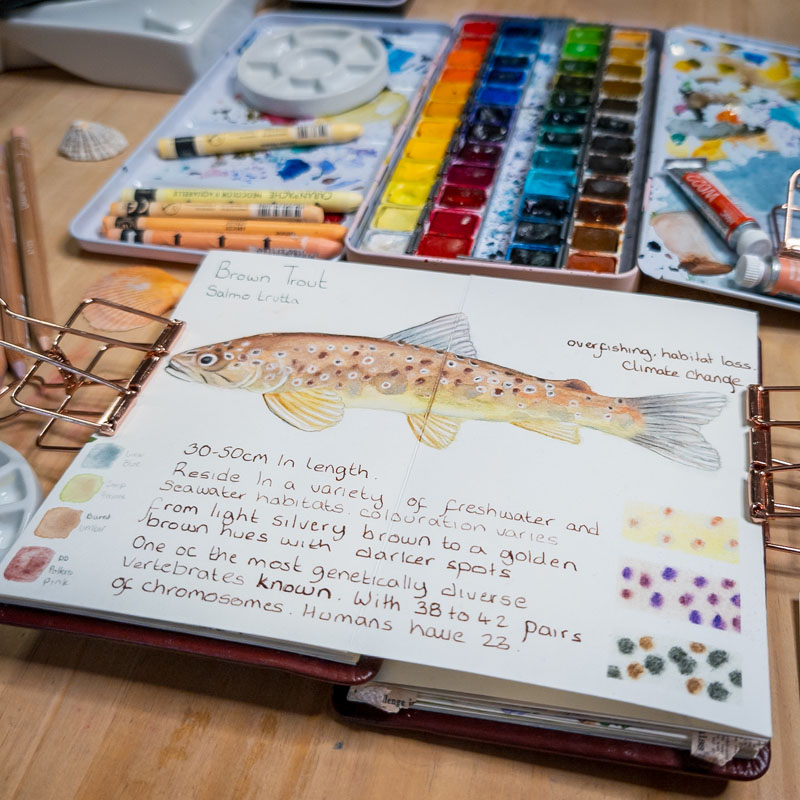
My natural starting point is always a sketchbook, and a new project often calls for a new one! This time, I chose a concertina-fold sketchbook. I felt this would help bring each species into existence as a connected series, fostering a sense of unity and equality across them all.
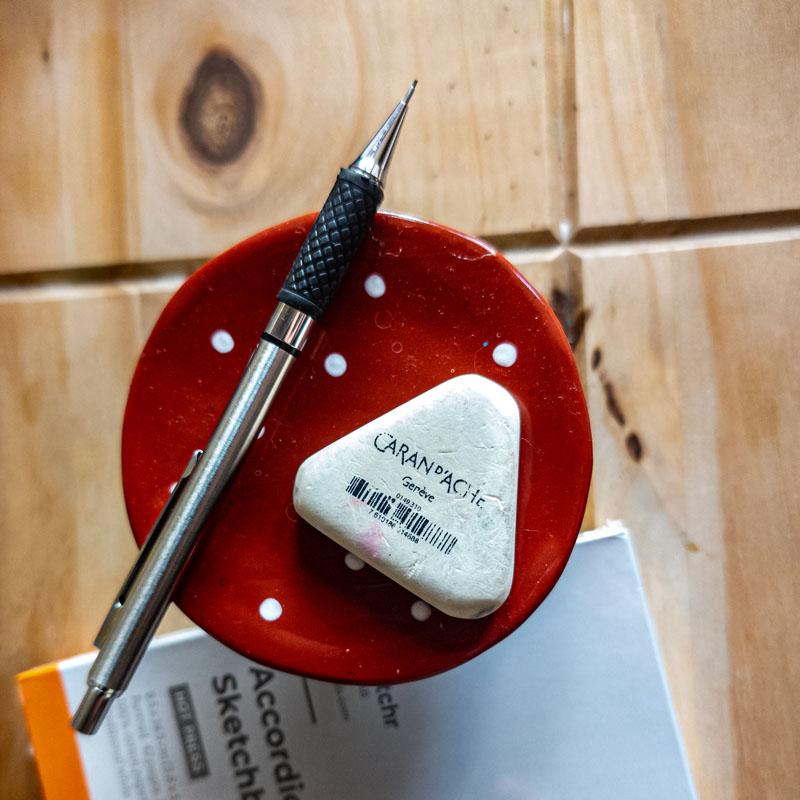
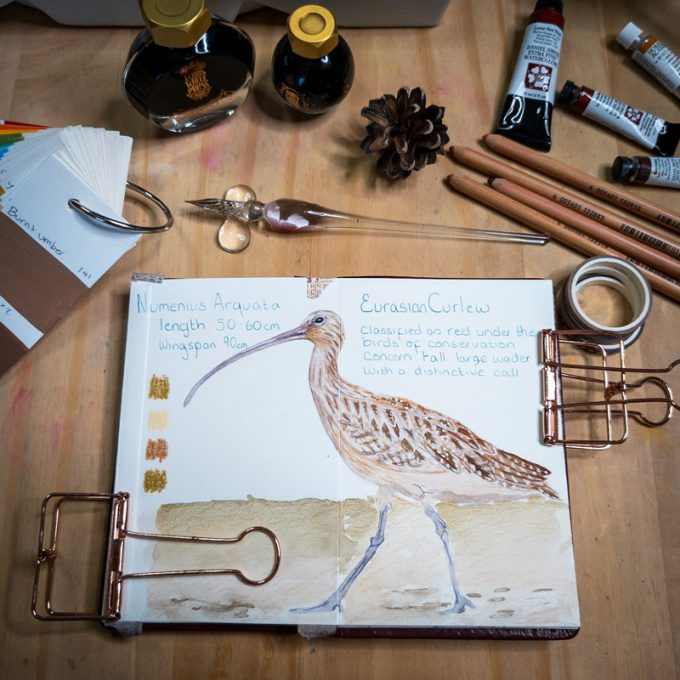
I initially worked with graphite and an eraser, creating outlines and simple shape sketches. Then, I moved on to watercolours and gouache, as I truly prefer painting my subjects. Gouache is particularly helpful for building up layers of detail until I feel satisfied with the result. It is very opaque and because u can ‘reactivate’ it by adding water, it works to my preference of creating smooth blended coverage.
Some studies were relatively small and came together quite quickly, while others unfolded over several days. It’s important to give my brain proper break times between sessions, allowing it to absorb and process the intricate details I’m observing.
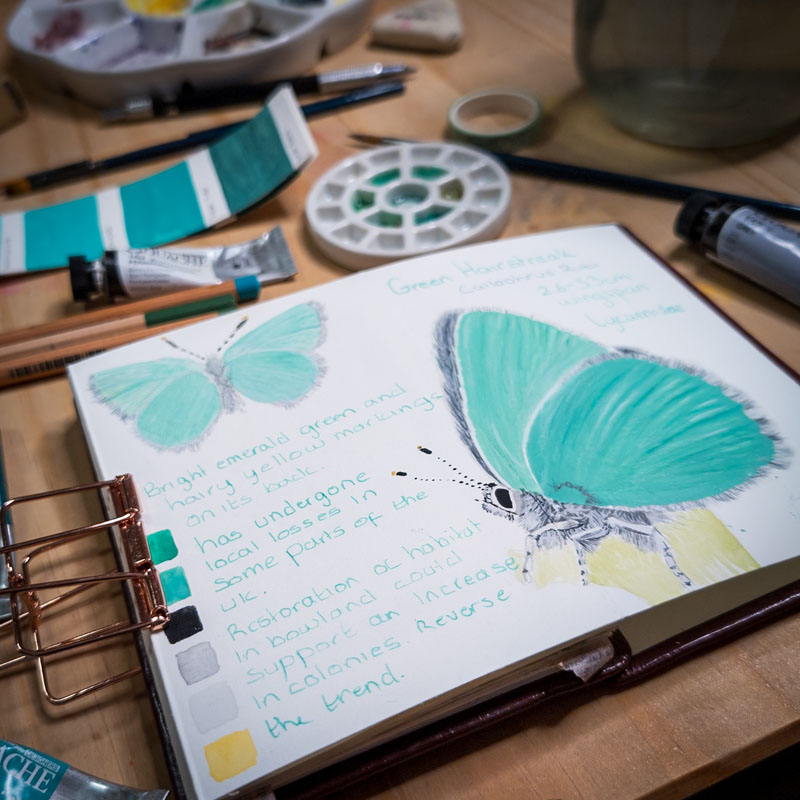
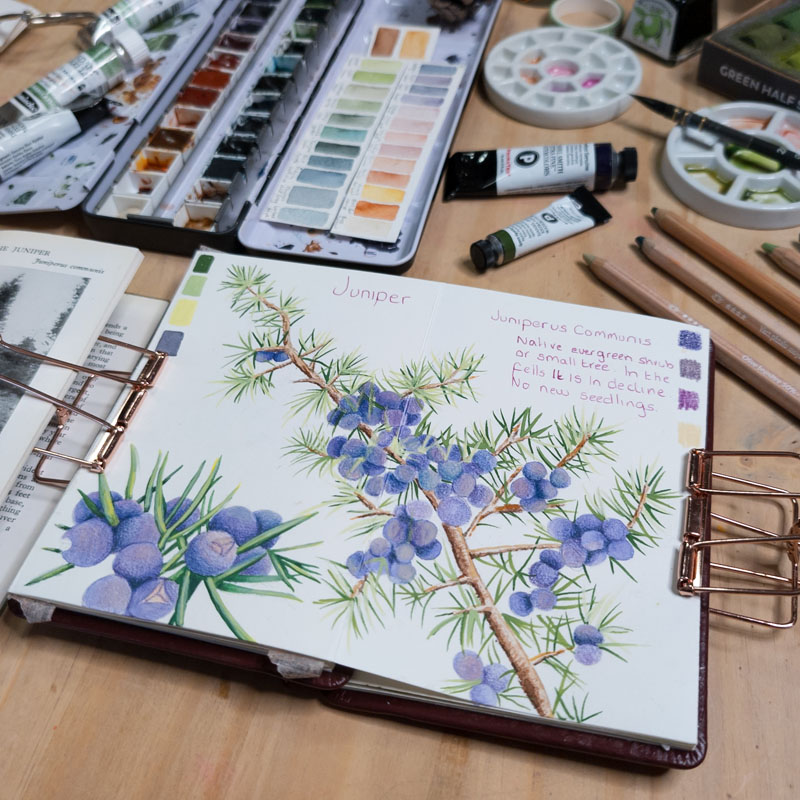
It’s often not until I draw something that I feel I truly understand its structure and form – the way colours or textures come alive when the light hits them, and how a composition of these aspects can be artfully pulled together once each piece of the puzzle is understood. It’s a quiet process of decomposition and recomposition. I’m simplifying and restructuring the essential elements.

Much of what I’m trying to describe here is documented far more eloquently by Martin Salisbury in his excellent book, Drawing for Illustration (2022). He articulates the relationship between the eye, hand, and brain much better than I ever could. For me, especially after working as a creative for many years, a lot of this process now feels quite intuitive.
So, I tend to do what feels right and trust that judgement. Keeping steady, even through the ‘ugly phase’ which all my art is known to go through. Frequent breaks are essential, as there’s a lot of unseen, quiet and emotional labour involved. It’s a system that works for me, and I recognise now that there are distinct phases I work through. That I might thing it’s not working at some point, but it will turn a corner and come together.
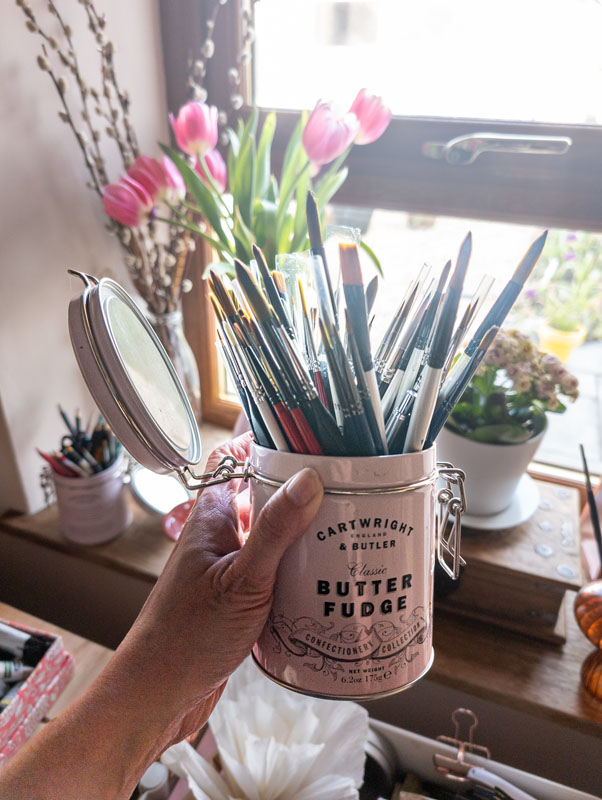
One phase that, in my opinion, has the biggest impact is adding colour. It can truly make or break a painting. We know the human eye can distinguish between a vast spectrum of colours – some say around a million – so the ten or so that come in an average tin of paints aren’t going to magically create the perfect hue. It takes careful thought (and a lot of patient mixing!) to land the colours just right.
Once this stage is complete, the initial learning and observation phase is done. These sketchbook studies become my functional references, trusted companions that I take forward to steer the next phase: creating very small, simplified digital versions suitable for the badges.
That’s a different set of skills, which I’ll touch upon in a future post.
In the meantime, I’m thrilled to share some exciting news! We’ve been so encouraged by the wonderful, positive feedback received already, and by requests for the original artwork to be made available. As a result, the team at the Forest of Bowland has kindly agreed to commission a short print run of my original hand-drawn illustrations and make the champion species prints available in both postcard and poster format.

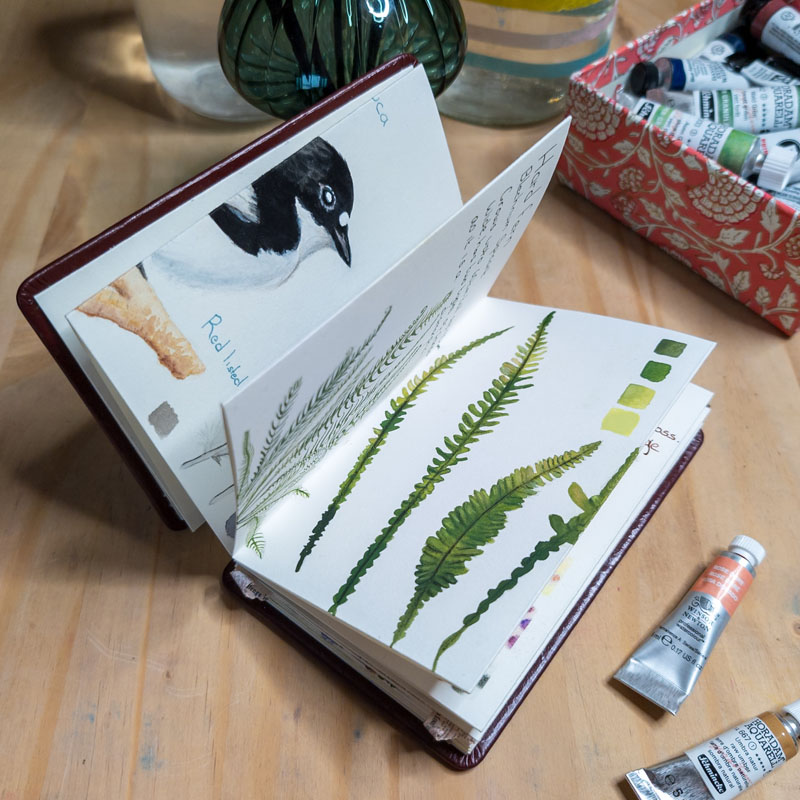
I also have a quiet hope that a replica of the concertina sketchbook itself, perhaps as a limited-edition art book, might also be a lovely way to share the full series.
It’s humbling to see these initial illustrations spark further opportunities. The most wonderful part of all this is that all sales proceeds will be given directly to the Champion Species charitable work, ensuring every purchase makes a real, positive impact on the ground.