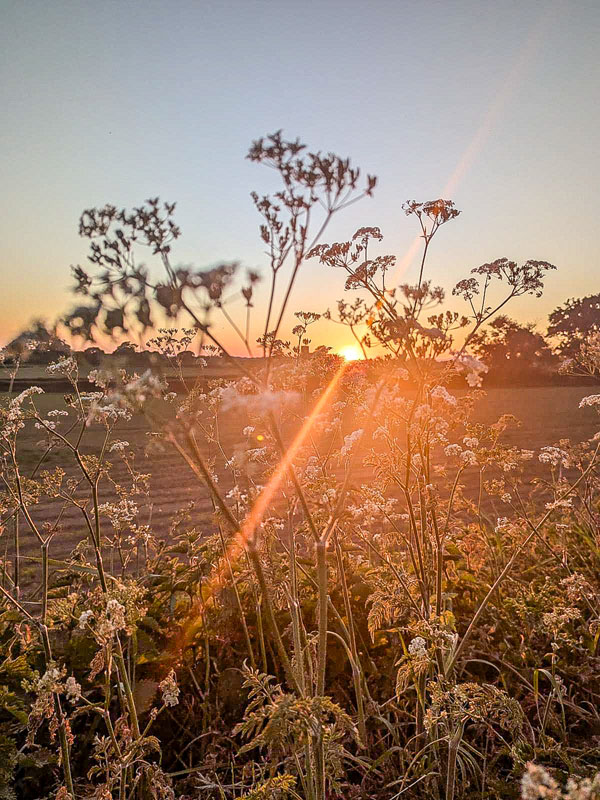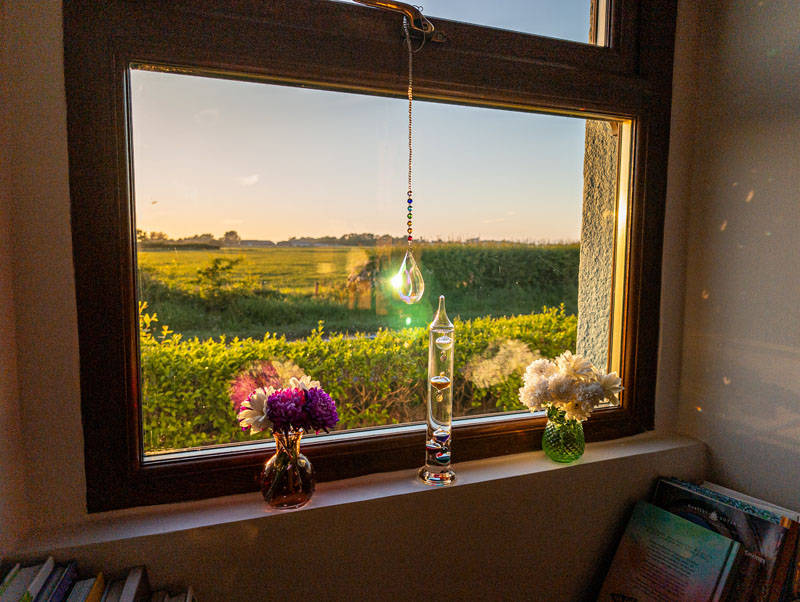
Outside has definitely begun to take on that early summer ‘glow’ that I adore. The late afternoon sun seems to just pour over everything, bathing the garden in this magical, golden light. It’s a radiance surely intensified by the long, dry spell we’ve been experiencing here. I honestly can’t recall the last significant rain shower, and the water butt in the garden is looking decidedly dry – contemplating staging a protest, probably.

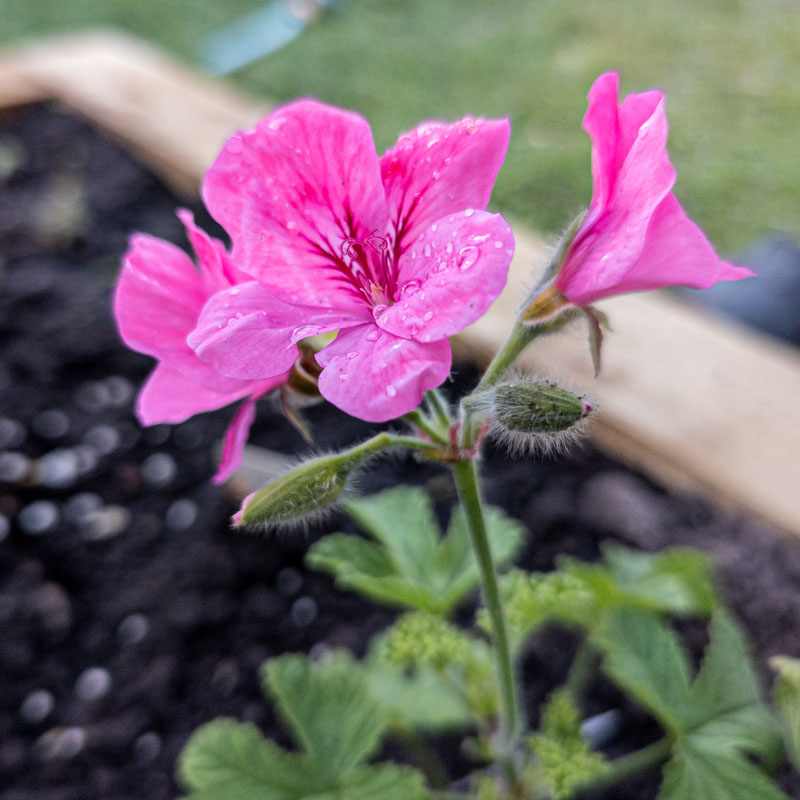
Despite the parched earth, my pelargoniums are thriving, taking the conditions in their stride. Many of my favourite plants share this quality – an inherent tenacity, an unflappable presence. There’s something deeply admirable about their quiet strength and ability to just get on with the business.
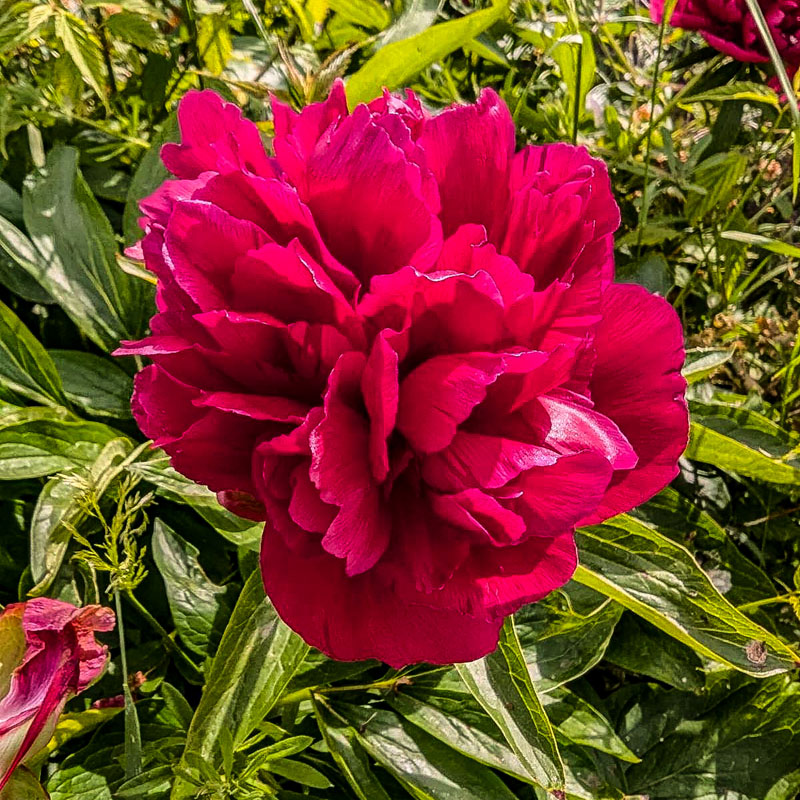
Monday commenced with the luminous presence of the full moon, fittingly labelled as the Flower Moon. Its name is said to originate with the breathtaking abundance of blossoms. My peonies certainly rose to the occasion, unfolding in a spectacle of full magenta dazzle, with the Alliums close behind, looking like giant, slightly fuzzy lollipops. So I’ve felt blessed by the simple warmth of the sun on my skin. Our brisk coastal winds have softened, now carrying a gentle, warm breeze. And beneath all of this, there was a distinct, resonant buzz – the pervasive hum of countless small lives, endlessly busy in the world around me.
Here are some of my encounters with the garden’s tiny inhabitants this week.
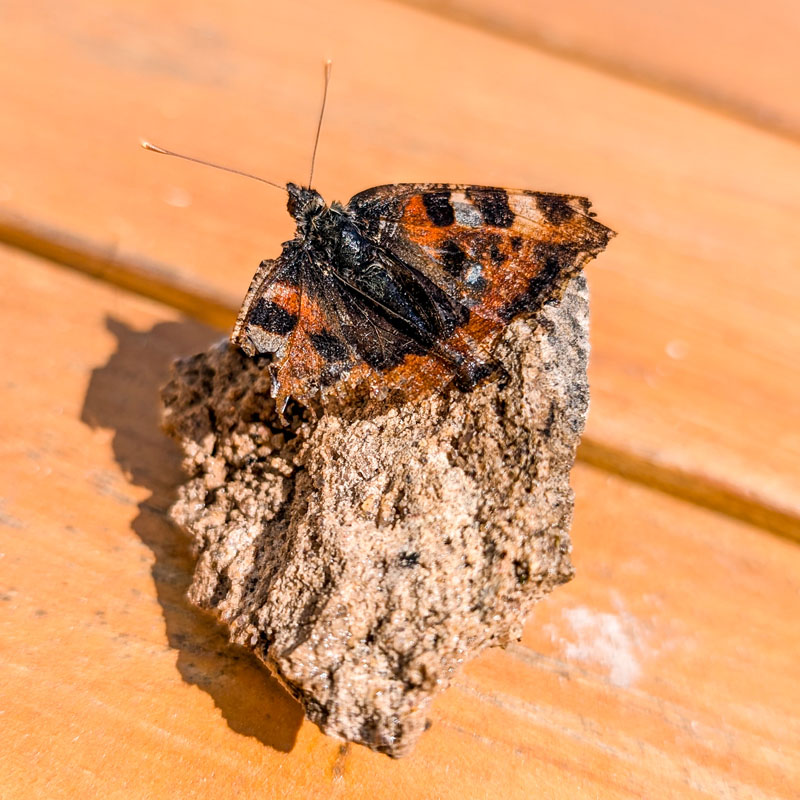
On Tuesday, I found a Small Tortoiseshell butterfly (Aglais urticae), sadly fallen into M’s watering can. As I gently rescued it, I noticed its wings were profoundly worn. Every flight, every landing, every brush against a leaf or a gust of wind had collectively taken its toll. This wear, especially visible on the edges and folds, is a testament to a life lived fully in the open air. It dried out and then flew off, soaring into the air. Nature’s tenacity, right there.
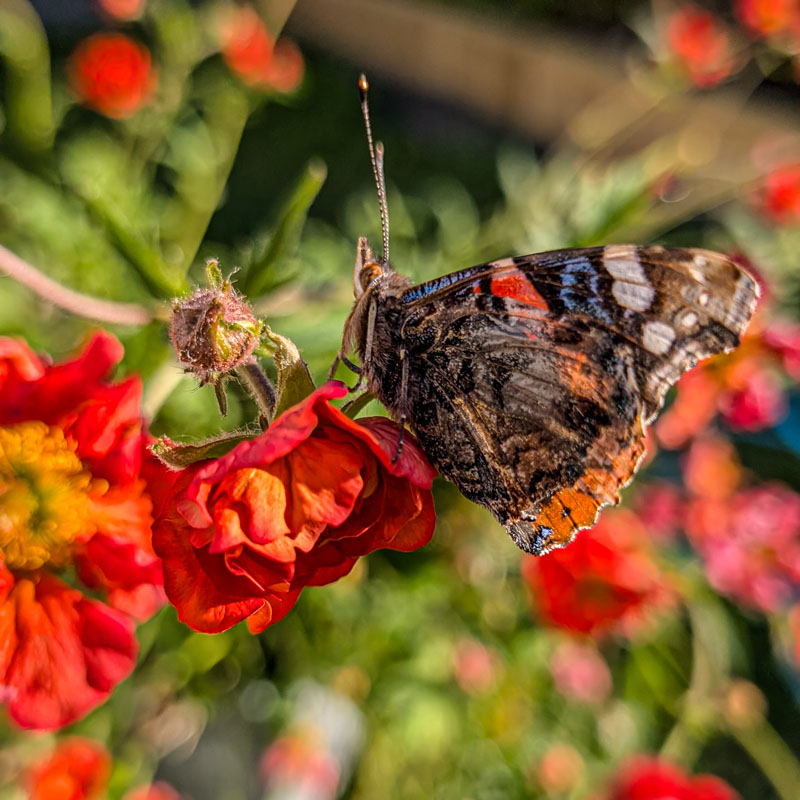
I caught sight of a few Red Admiral butterflies (Vanessa atalanta) engaged in a flashy spiralling dance on Wednesday. This aerial ballet is often a courtship display, a vital part of their life cycle – essentially, butterfly speed dating up in the air! Once or twice they landed, and through sheer perseverance (and a very steady hand!), I managed to get a photo of one basking in the afternoon light.
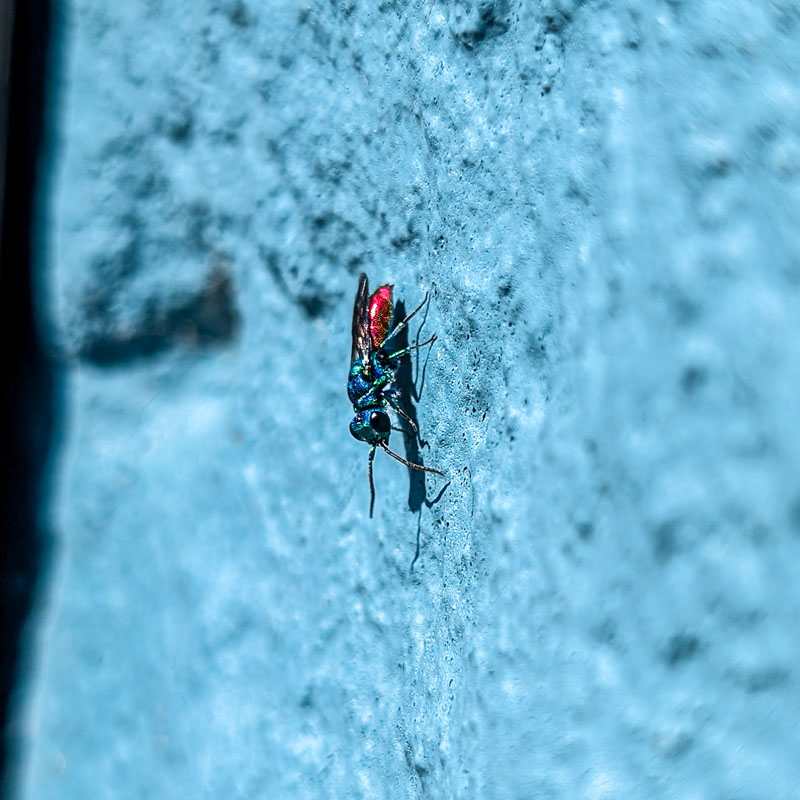
Mid-week, I spotted a Ruby-tailed Wasp, Chrysura ignita. These insects are breathtakingly flashy, their exoskeletons shimmering with iridescent reds, greens, and blues like tiny pieces of jewellery come to life. I’m aware that distinguishing them from closely related species like Chrysis angustula can be incredibly difficult, often requiring examination of minute details – something not possible in the brief moment we shared. However, if it was indeed the Ruby-tailed Wasp, as I suspect, that beauty hides a rather formidable parasitic nature. The females seek out the nests of solitary bees and wasps, and lay their own eggs inside. When the larva hatches, it consumes the food stored for the host’s young, and sometimes even the host larva itself.
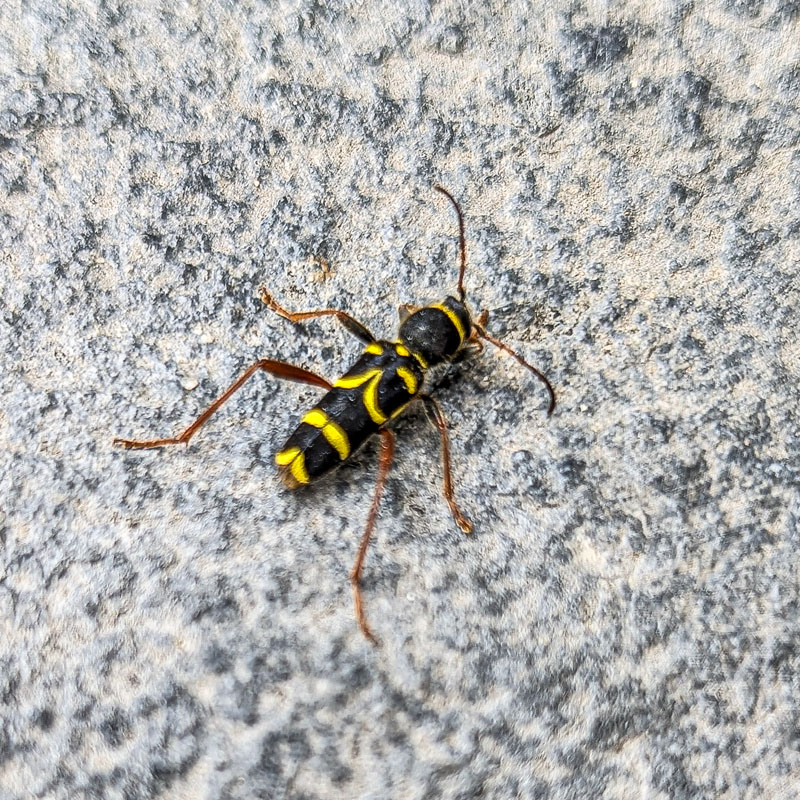
Towards the end of the week Iobserved another ‘wasp’, that was actually a Wasp Beetle (Clytus arietis). Not only does it carry those distinctive yellow and black markings, but it acts like a wasp too, moving with a jerky, stop-start motion. This mimicry is a brilliant part of its survival strategy – a harmless beetle pretending to be something with a sting.
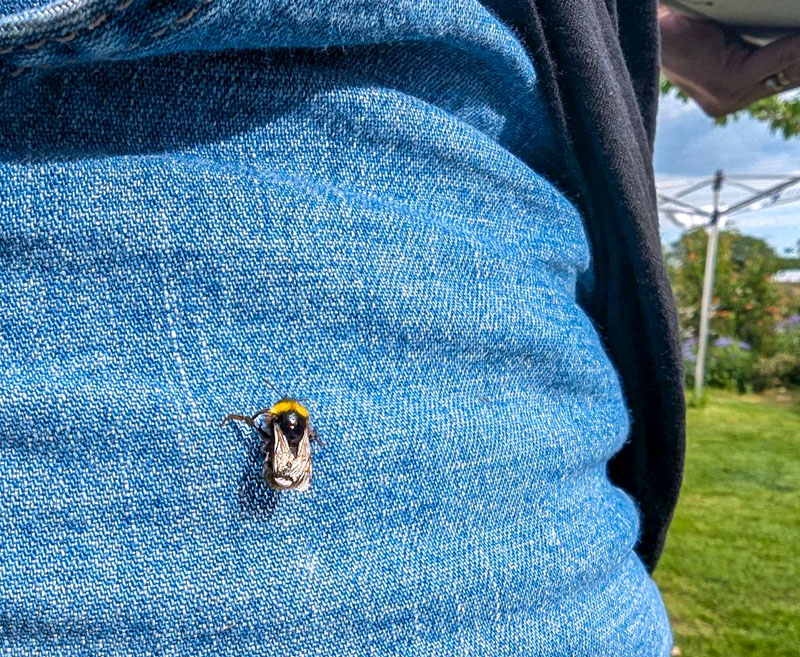
Finally, I made friends with an Early Bumblebee (Bombus pratorum) at the weekend. It landed on my denim shorts whilst gardening and seemed to choose that spot to take five and give itself a good clean. It was fascinating to watch a mini spa groom session up close! Early Bumblebees are often some of the first bumblebees to emerge in spring, having spent the winter tucked away safely. It took off eventually into the Alliums, taking its fill of the blooms on offer.
My final note for the week has been the arrival of my little seedlings. I’ve had a small success in growing Hare’s Tail Grass (Lagurus ovatus) from seed this spring. It is a soft, dense annual grass that produces incredibly charming, fluffy, ovate seed heads that truly resemble a hare’s tail or perhaps tiny puffs of cotton wool.
Like many people, I’m growing it for the ornamental qualities and hope to do some more observations and maybe even drying studies once it’s grown nice and strong.
Watching the little seedlings emerge has left me with a sense of gratitude. And in these quiet moments, where observations of sunlit wings, intricate behaviours, and quiet resilience unfold, there is a profound sense of wonder that just seeps in.