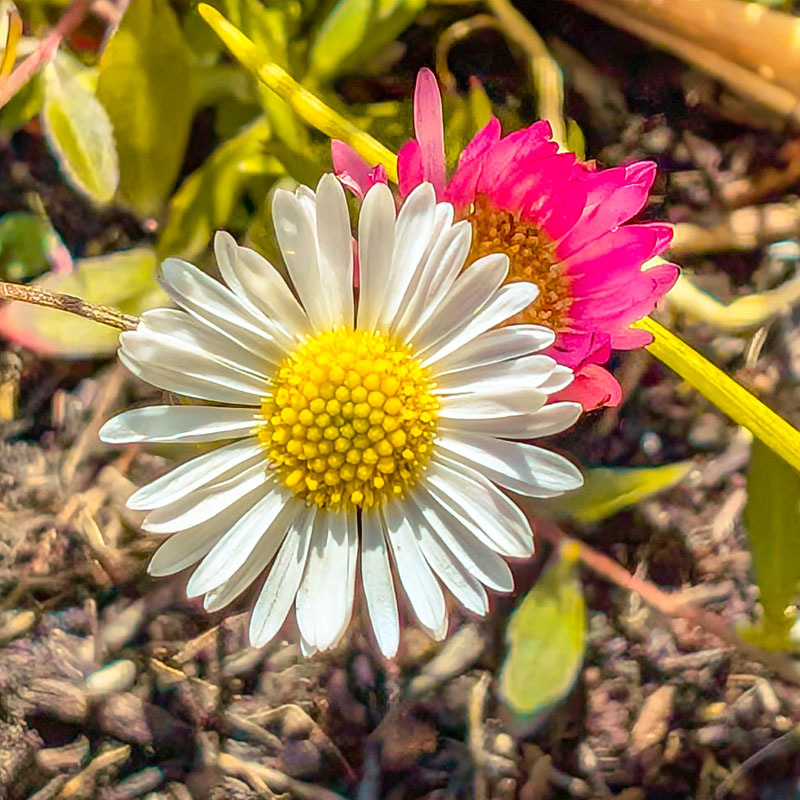
Well, hello hello! This week truly kicked off with that zesty, almost giddy New Moon in Gemini energy. And honestly, it’s been a week that demanded a bit of that adaptable spirit, because the skies have been putting on quite the performance. We’re talking less “gentle drizzle” and more “sideways rain” with an extra sprinkling of coastal wind. I half expected to see Mary Poppins sailing past my kitchen window at one point.
To be fair, I’ve genuinely enjoyed seeing the parched earth finally get its moisture back. Plus, it’s provided the perfect excuse to get ‘stuck’ inside for a few days, because, drumroll please… BBC Springwatch is back on my screen! Woohoo!
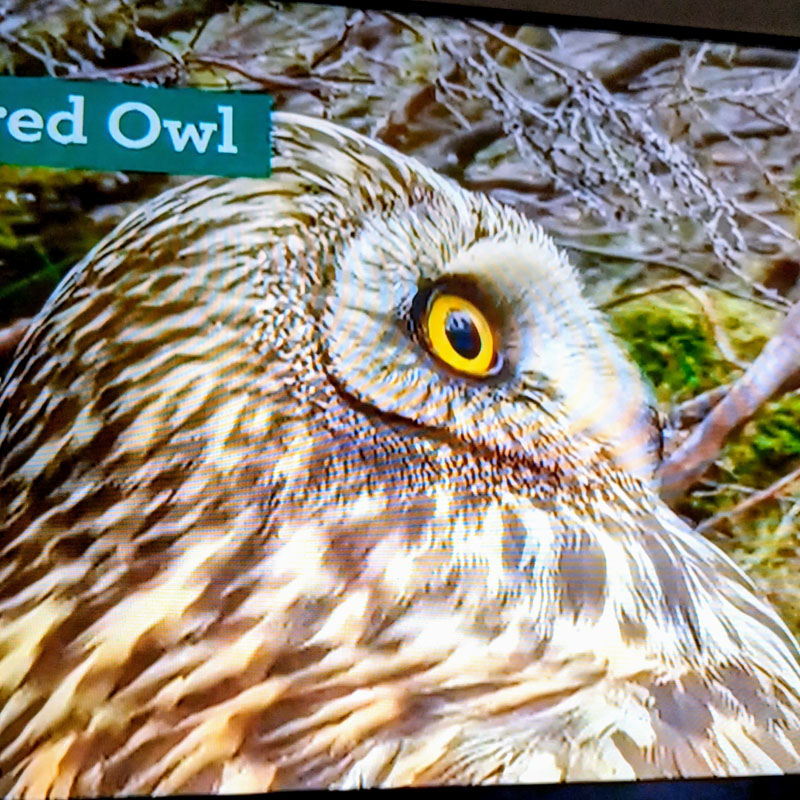
If you know me, you know this is probably my favourite programme of the year. I’m an avid, almost obsessive, lover of the wildlife cameras – it’s like having a VIP pass to nature’s greatest reality show. Perfect for gathering art reference!
How utterly brilliant is it to have the show based in the Peak District this year? Such a beautiful, rugged area, and what a treat to see its wildlife secrets unfold.
So far on the live cams, I’ve had the immense privilege of watching tiny curlews (Numenius arquata) fledge, clumsily making their way into the big wide world. And the short-eared owls (Asio flammeus) – oh, those fluffy bundles of lethal beauty! They have also grown and fledged, scattering into the undergrowth with that instinctual drive to stay protected.
It’s truly humbling to witness such raw, wild parenting up close.
Speaking of parents, I’ve taken a particular fondness to the song thrush (Turdus philomelos) nest this year. These little powerhouses are such dedicated parents in the UK, constantly ferrying food, defending their territory, and feeding their young. They embody that tireless, slightly frazzled, but utterly devoted parental vibe that I can relate to!
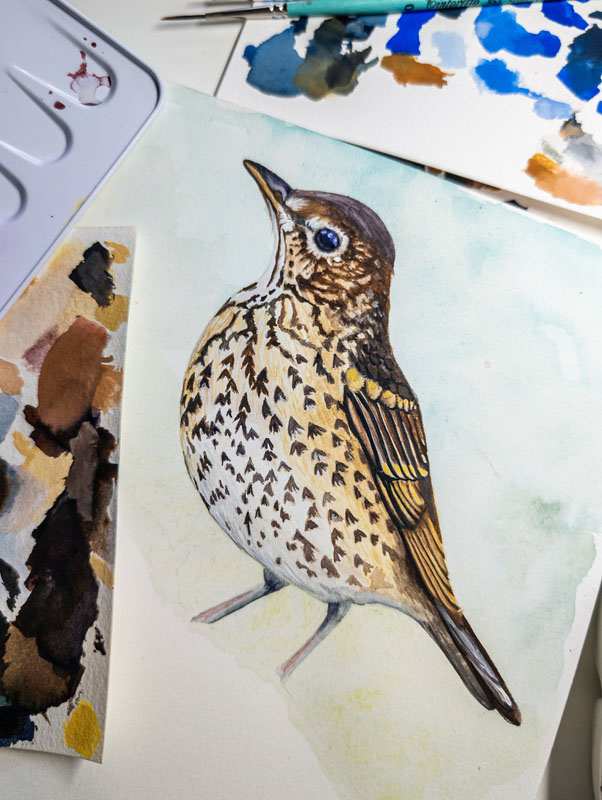
Painting that little song thrush was an absolute treat. I leaned heavily into transparent ochre and yellow ochre to capture that subtle warmth in its plumage, grounded with warm sepia and burnt umber. The secret, I find, is to mix in touches of indigo blue and dioxazine purple to neutralise the browns and bring depth, all without touching black. Black, I’ve learned, can often deaden birds that have that inherent ‘glow’ or vibrancy about their feathers. It’s all about letting the light live in their colours.
And speaking of paintings of birds, while I’ve done a number this year, my very first bird of 2025 is also having its moment in the Springwatch spotlight – the pied flycatcher (Ficedula hypoleuca)!
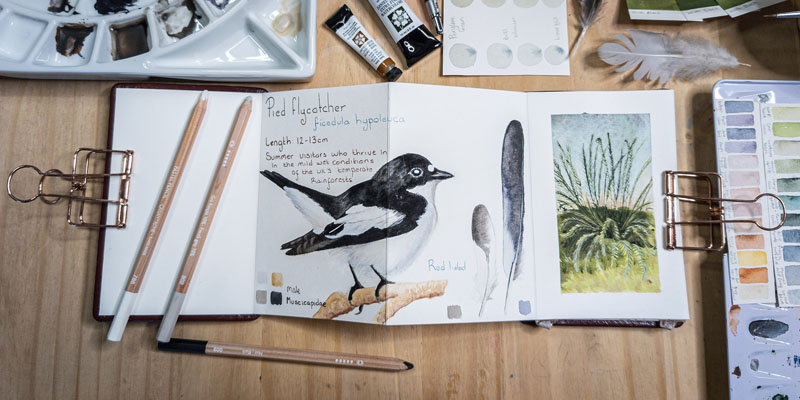
I painted this striking bird early in January for the Champion Species project, and it has such a clean, graphic quality. Though, seeing it on screen now, it instead looks rather tatty – I think those relentless parenting duties have definitely taken their toll!
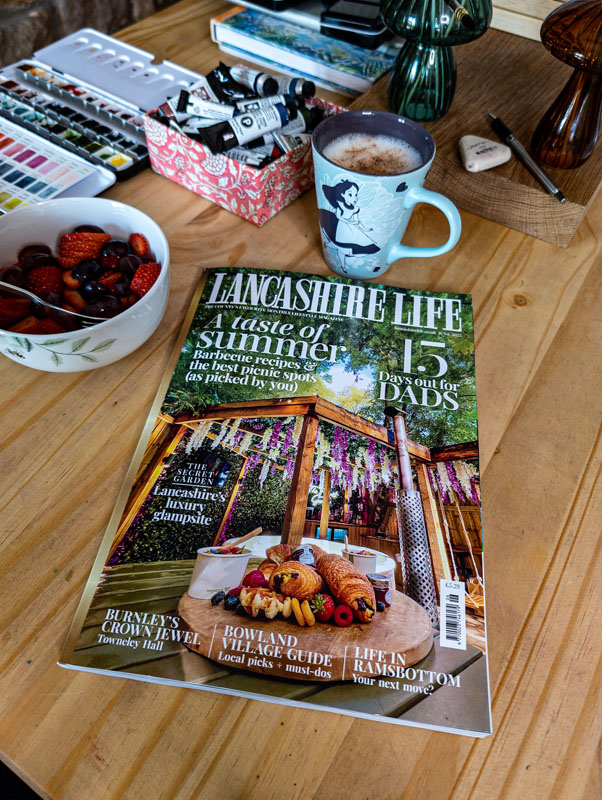
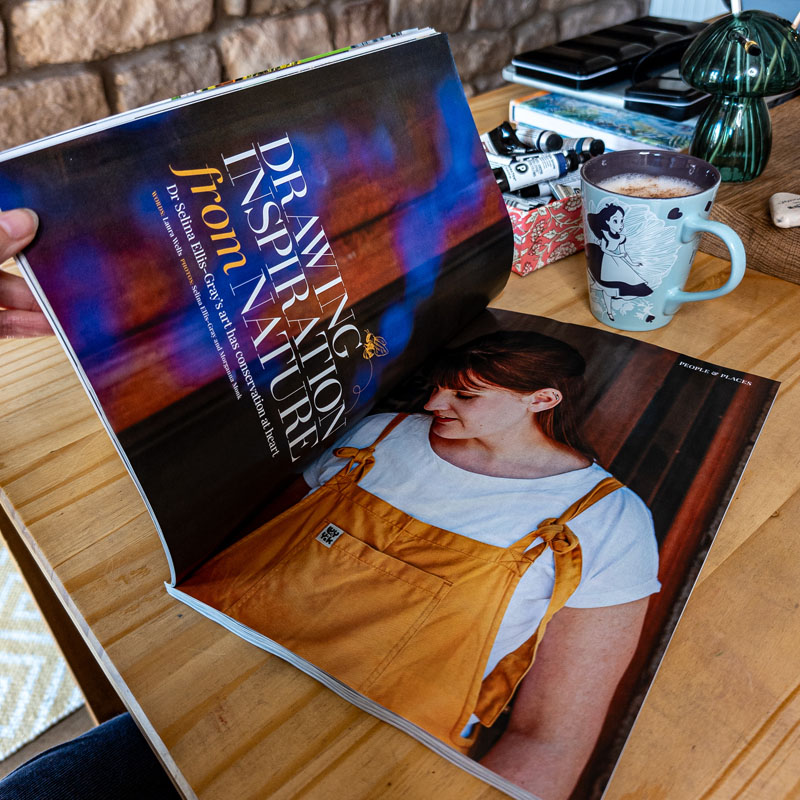
Along with Springwatch kicking off the week with a dose of wild wonder, M (my co-pilot in life’s adventures) came back with a copy of the Lancashire Life magazine. So, I finally got around to having a proper look at the article about the Champion Species project. It’s always a bit surreal to see your own work in print, but I’m thrilled it’s out there. Hopefully raising awareness to all the work going on.
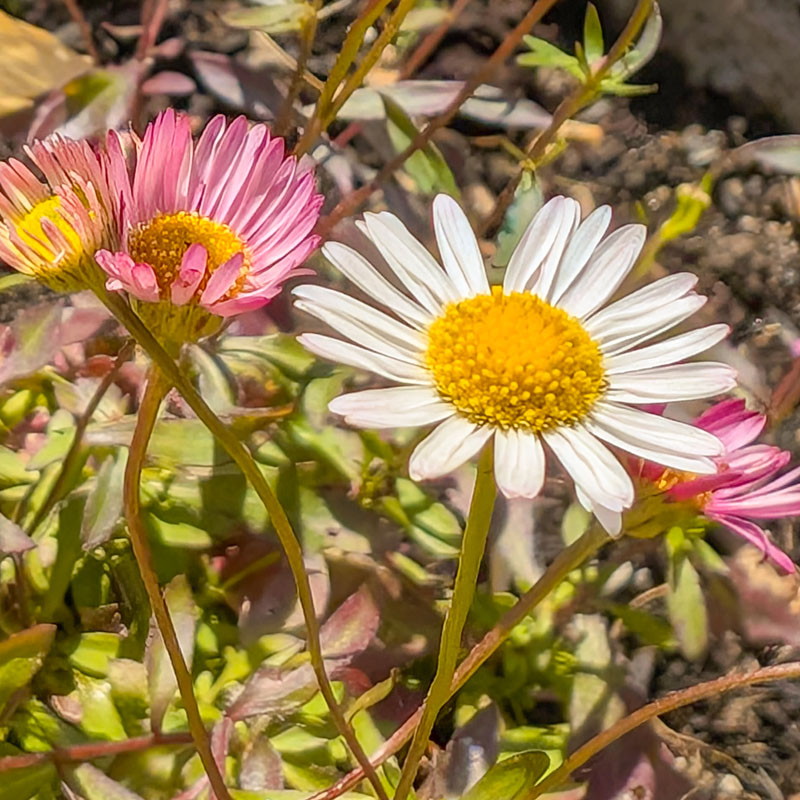
To round off the week’s nature observations, my delicate white spring peas have finally started to unfurl their petals, a welcome splash of colour. And my rambunctious Mexican fleabane (Erigeron karvinskianus) has seemingly doubled in size overnight, clearly revelling in all the recent downpours.

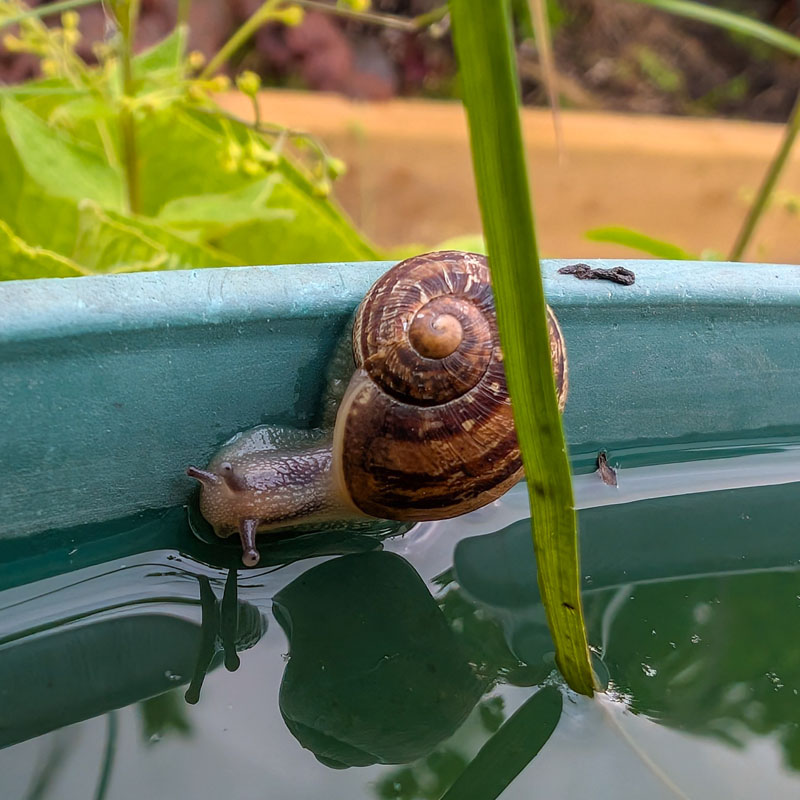
Lastly, after all the rain this week, I genuinely didn’t expect to see a snail (Helix aspersa or similar) taking a leisurely drink at the edge of the bird bath. Gulping down water with an almost comical seriousness. I’m still wondering, with mild awe, how long it took him to climb all the way up there! What a world.