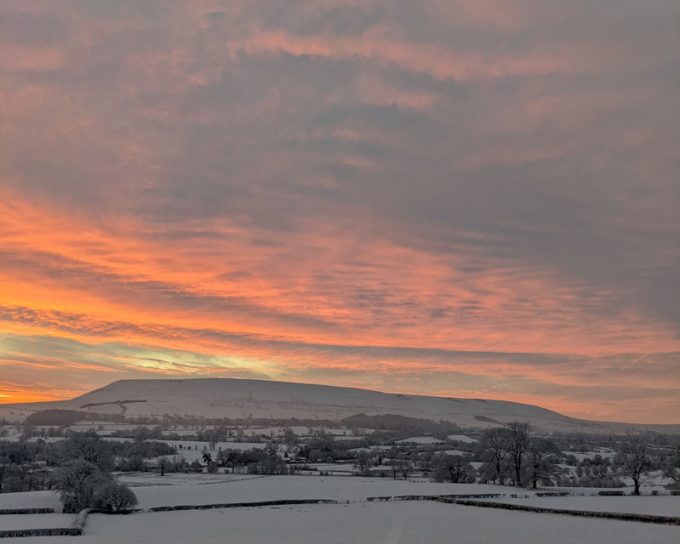
Well, has autumn decided to just show up with flair. I don’t know about you, but I’ve been feeling a shift in the air this week. It’s that orange-glazed time of year when the days start to feel a little shorter, and there’s a distinct crispness in the morning air. We had a new moon on Sunday too, which felt like a cosmic reset button, followed by the autumn equinox yesterday.
It’s a moment of perfect balance before the scales tip fully towards the darkness of winter.
I’ll admit, I have a bit of a love-hate relationship with the months between now and the winter solstice. The gradual descent into darkness can be a challenge for me. We lose daylight at our fastest rate in September and October—around two to three minutes a day—and that really adds up. For some of us, that’s a whole hour of light gone each month as we slip away into winter. Ouch.
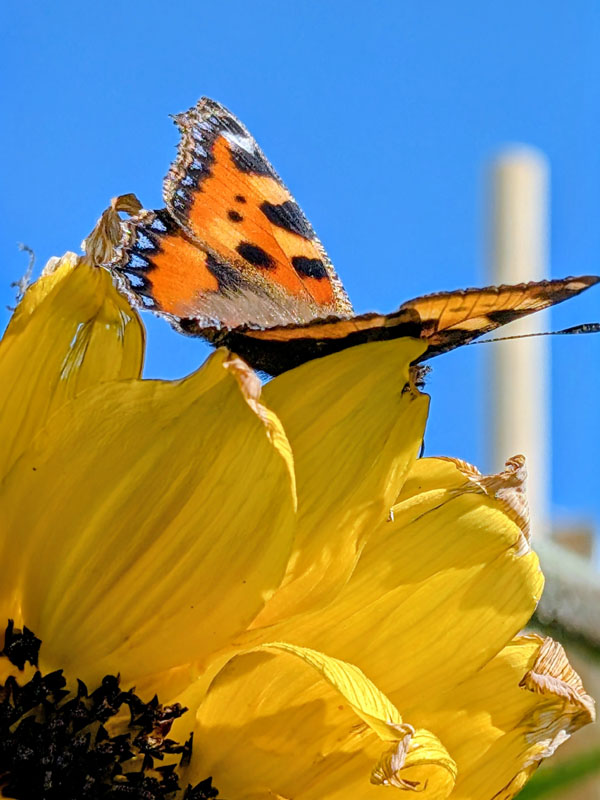
I miss the long light days of summer and the heat of warm winds and sunshine. So I try to take it as a cue to slow down, pull on a cosy jumper, and embrace the season of deep winter creeping in with its wintering rest. I find myself looking forward to giant mugs of tea too, hot chocolate and the ridiculous but comforting smell of pumpkin spice.
And as I settle into this new seasonal rhythm, I’ve been finding new ways to connect with my art and the nature around me. I have a much welcomed ‘gap’ in my commercial work and I’ve been deeply enjoying the creative freedom. This week, that’s taken the form of getting stuck into something a little less structured: nature scrapbooking.
A Scrappy Approach to Nature Journalling
Nature journaling is a wonderful practice. Sometimes it can feel a bit rigid tho. The pressure to create a perfect, polished page full of flowing artwork can sometimes stifle creativity. If you’ve ever felt this way, or if you’re just looking for a new way to explore your connection to the natural world, consider trying a nature scrapbook. There’s no hand-wringing to be had, just pure curation and joy.
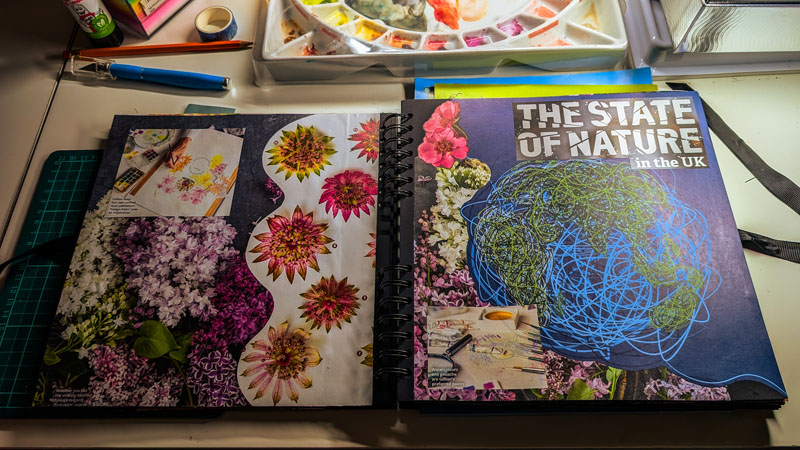
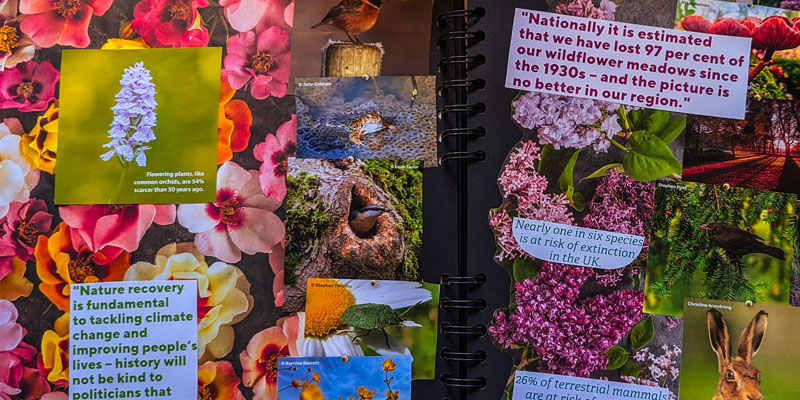
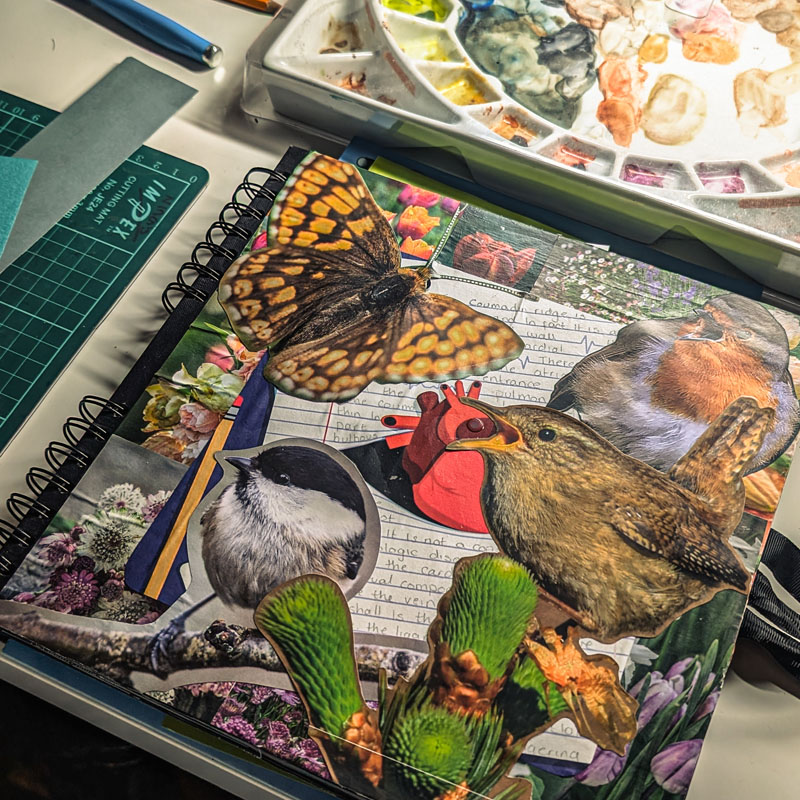
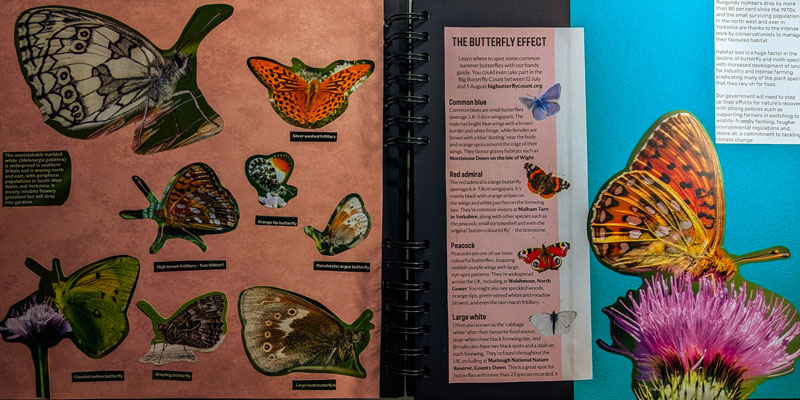
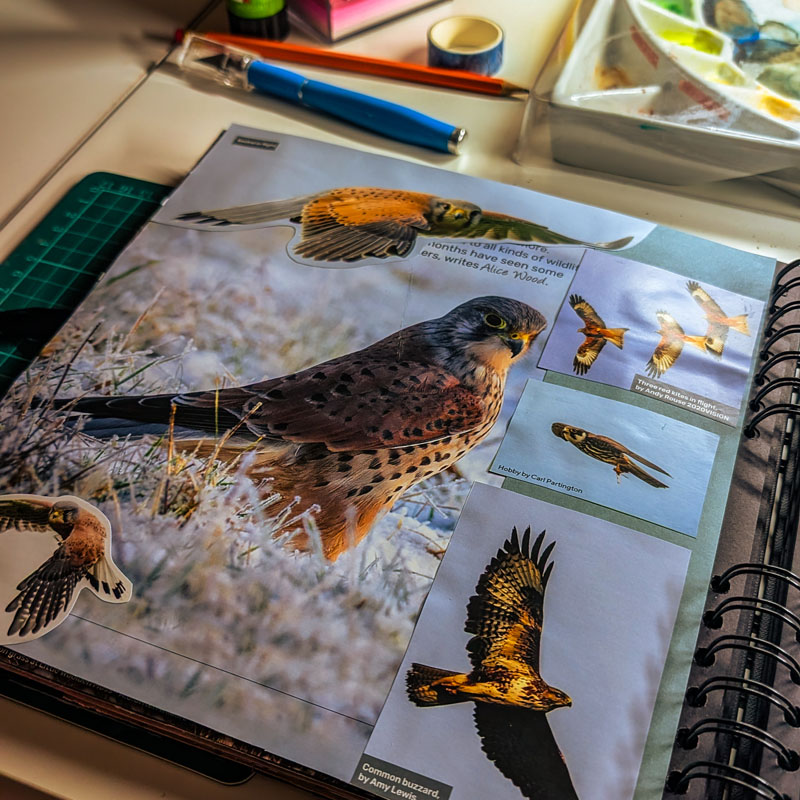
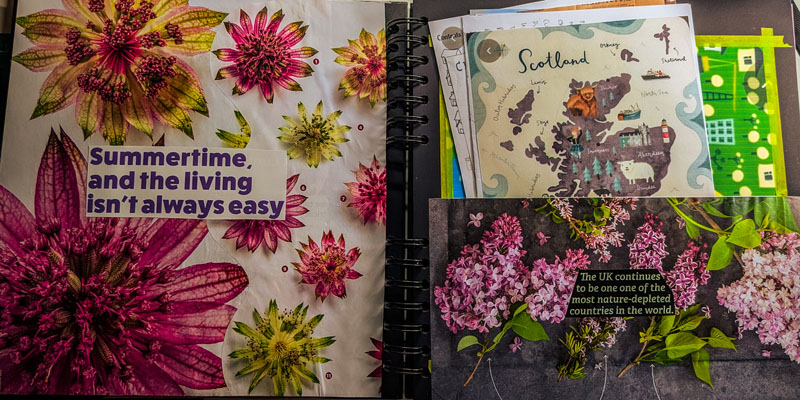
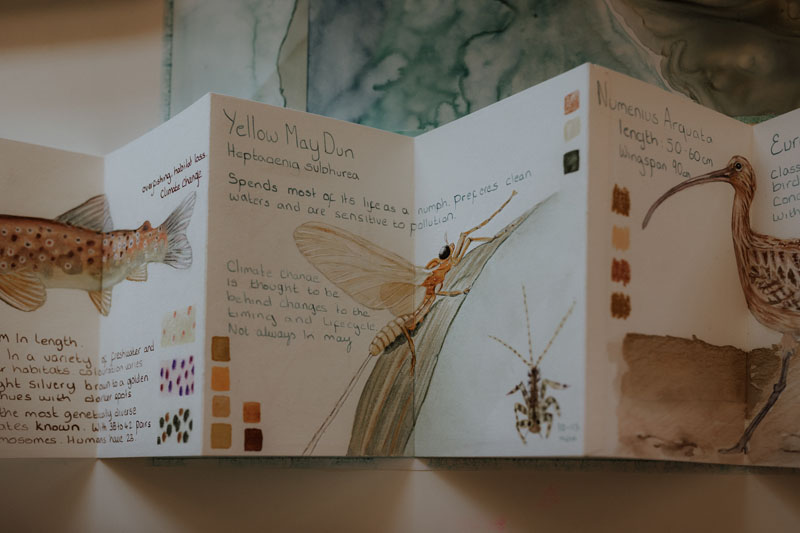
My latest self-directed project has me working through the state of UK nature, so I’ve been busy cutting, glueing, and arranging scraps from old magazines, newspapers, and leaflets. This scrappy approach to journalling has not only been a fantastic outlet for my creativity but has also proven to be surprisingly useful. As I’m currently in the middle of brewing up something new.
So my nature scrapbook is more than just a collection of pretty pictures. It’s a powerful tool for observation, reflection, and inspiration. Here are a few reasons why I’ve found it to be an invaluable part of my practice:
- It’s Meditative: The act of sifting through materials, cutting out images and text, and arranging them on a page is incredibly mindful. It forces me to slow down and really look at what you’re seeing and reading. This focused, hands-on process can be deeply calming and meditative, offering a welcome break from digital screens.
- It’s good Visual Reference: A scrapbook is a fantastic way to collect visual references. I’ve been using my pages to document the UK birds, flowers, and mammals I see around the salt marshes here in Lancashire. It’s a great way to build a personal library of visual information that is both a record of what you’ve seen and a source of inspiration for future projects.
- Becomes a source of Inspiration: Looking at the composition of different materials can spark new ideas for art and design projects. It’s an excellent way to get in touch with my aesthetic instincts and sense of play. This process is a little like creating a mood board for my creative endeavours.
- Deconstructing Narratives of Nature Recovery: My current project is a good example of how scrapbooking can help me go deeper into a topic. By cutting out headlines and articles about the state of nature, I’m starting to see the kinds of narratives that are at play in the media.
- Capturing my Personal Aesthetic: The “cut and paste” nature of scrapbooking lends itself to a DIY, punk aesthetic that I find really appealing. I love zine-making and getting stuck into something I want to do. There’s no pressure for perfection; the focus is on experimentation and expression.
The best part about scrapbooking is that there are no rules. I do it however I want. I don’t need expensive supplies—just a blank sketchbook, some glue, and some interesting scraps. I can start collecting things like a small piece of a dried leaf, a snippet of an article, or a picture from a magazine can all find a home in my journal. Building up these scraps and building page layouts as I go.
This approach to nature journaling is about embracing the imperfect, trusting my creative instincts, and letting pages tell a story that is uniquely your own. It’s a perfect activity for the dark nights inside.
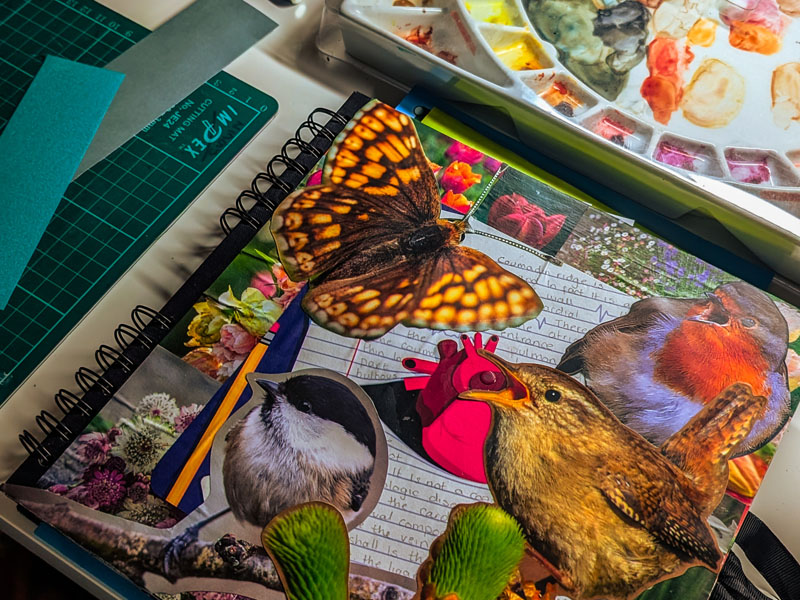
Here’s some more photos from mine: