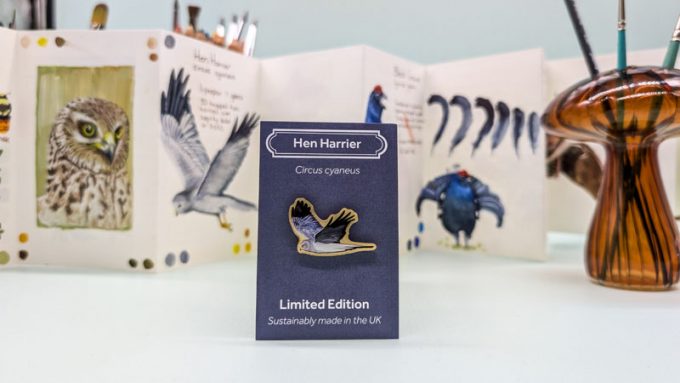
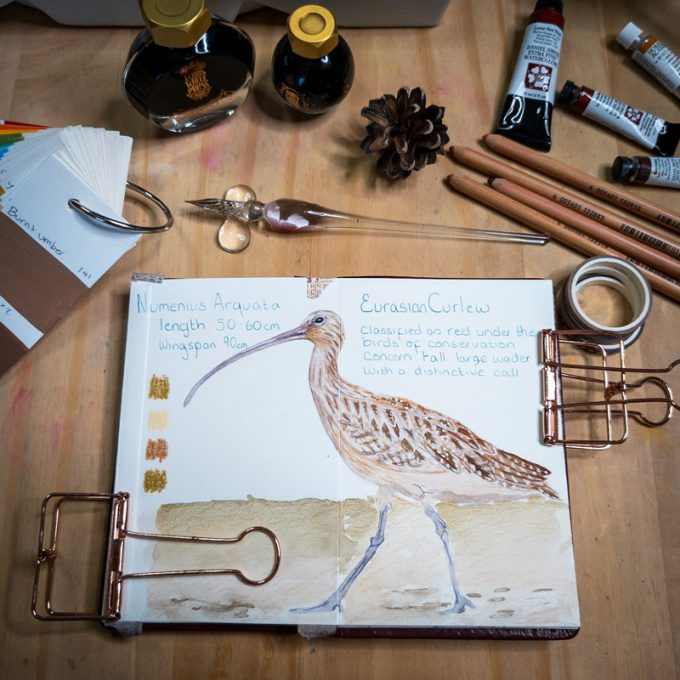
Hello hello! Welcome to my blog series dedicated to the ‘Champion Species’ of the Forest of Bowland National Landscape. After previously exploring the iconic Hen Harrier and the evocative Eurasian Curlew, this week I’m turning my artistic eye to a truly magnificent and somewhat mysterious resident: the Black Grouse (Lyrurus tetrix).

To be completely honest, until I started working as an illustrator on the Nature Recovery project, I didn’t even realise Black Grouse were present in the Forest of Bowland National Landscape! It’s one of those species that has always been on my ‘must-spot-one-day’ list, often feeling more like a creature of remote Scottish moors than the familiar fells of Bowland. This discovery made the whole process even more exciting, imagining how I one day might be out with a flask and some butties and see one on my doorstep!
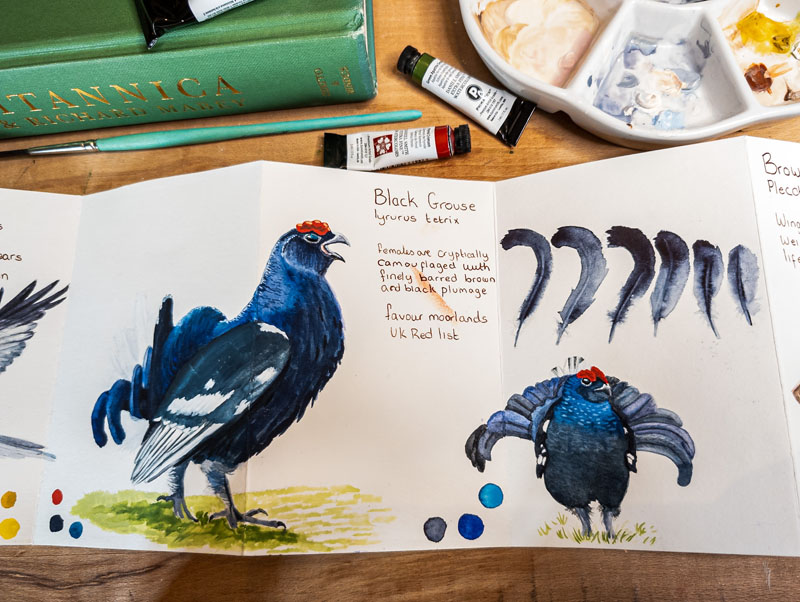
Sadly, I’ve still never seen one. I’ve had to study the Black Grouse through online content, in books and through photography. And from an artist’s perspective, the male Black Grouse is nothing short of a showstopper. So I’m slightly disgruntled never to have encountered one! Their plumage is a deep, iridescent blue-black, shimmering with hints of violet and green in the right light. This isn’t a flat black; it’s a living, breathing colour that demands careful layering to capture its complexity.
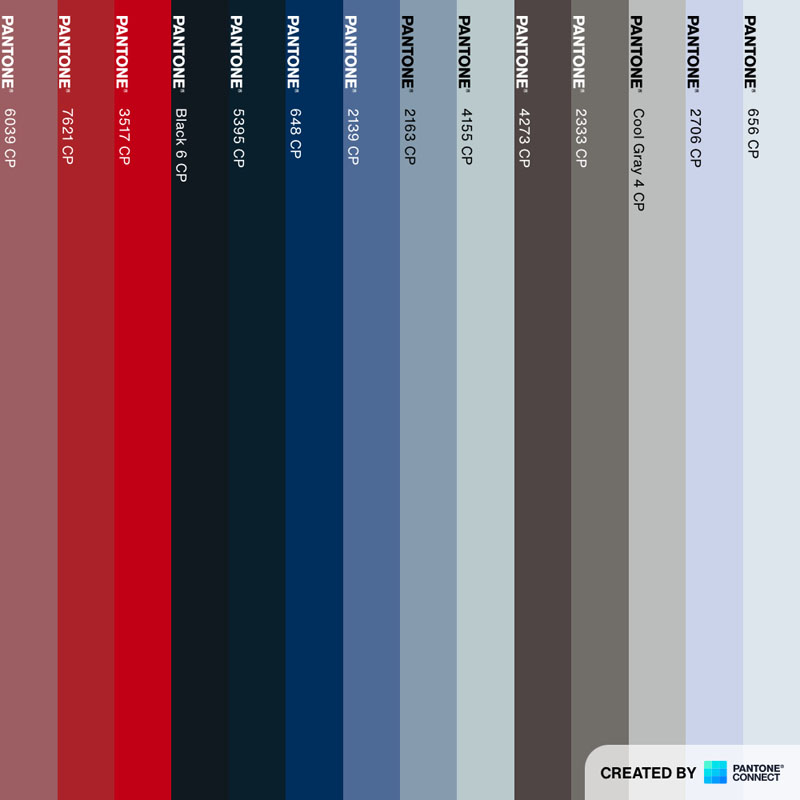

To convey this, I’d reach for rich an Indigo Blue or a rich Mayan Dark Blue, some sepia to neutralize, and mixed with greys, purples, and subtle green flecks to suggest that incredible iridescence. I do have some iridescent medium too, which I use as an additive to any of my paints or colour mixes to add a touch of sparkle. I have more recently bought a pearl gouache too, which is thicker in consistency and also proves very helpful.
Alongside the glimmer is a notable striking colour contrast too– the bright, near neon-red wattle above the eyes. On the colour wheel, blue and red are far from complementary, creating an almost electrifying visual tension. This contrast is key to their visual impact; it’s a flash of pure, vibrant life against the deep, brooding tones of their feathers. Capturing that vivid red so it truly ‘pops’ is the fun part!
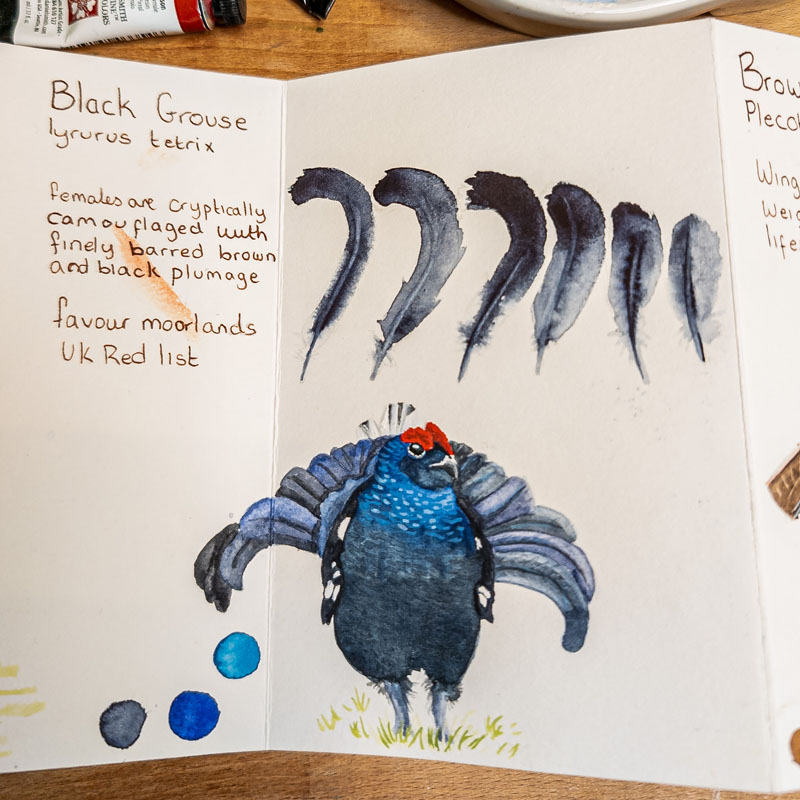
The shape of the male is dramatic, due to its distinctive, lyre-shaped tail, which becomes fanned out during their display. The females, known as ‘greyhens,’ are much more camouflaged with their mottled brown plumage, blending seamlessly into the moorland environment.
In the Forest of Bowland, you’d typically find Black Grouse on the fringes of the open moorland, especially where it meets rushy pastures. They prefer a mosaic of habitats, allowing them to feed on berries and shoots, find cover, and perform their ‘lekking’ displays. During spring, the male Black Grouse gather at traditional display grounds known as ‘leks.’ Here, they engage in an extraordinary spectacle of courtship. The males puff themselves up, spread their impressive lyre-shaped tails, and emit calls and hissing sounds as they spar with rivals to attract the attention of the greyhens.
Sadly, despite their charismatic nature, the Black Grouse is another of our champion species facing significant challenges. Their numbers have declined dramatically across the UK, earning them a ‘Red List’ status, meaning they are of the highest conservation priority. This decline is largely due to habitat loss and fragmentation, as well as changes in land use that reduce the quality and connectivity of their preferred environments. You can learn more about the challenges facing these birds their website for the Black Grouse.
Efforts are underway to protect these magnificent birds and restore their habitats. Conservation projects often focus on improving moorland management, creating diverse vegetation structures, and restoring peatlands to provide suitable conditions for both breeding and wintering. For a good overview of ongoing conservation efforts in the UK, you can explore the RSPB’s work on their page for the Black Grouse Recovery.
The future of the Black Grouse in areas like the Forest of Bowland depends on these continued efforts to safeguard their vital upland homes.
You can learn more about the Black Grouse and their conservation status from organisations like the RSPB at the British Trust for Ornithology (BTO).